









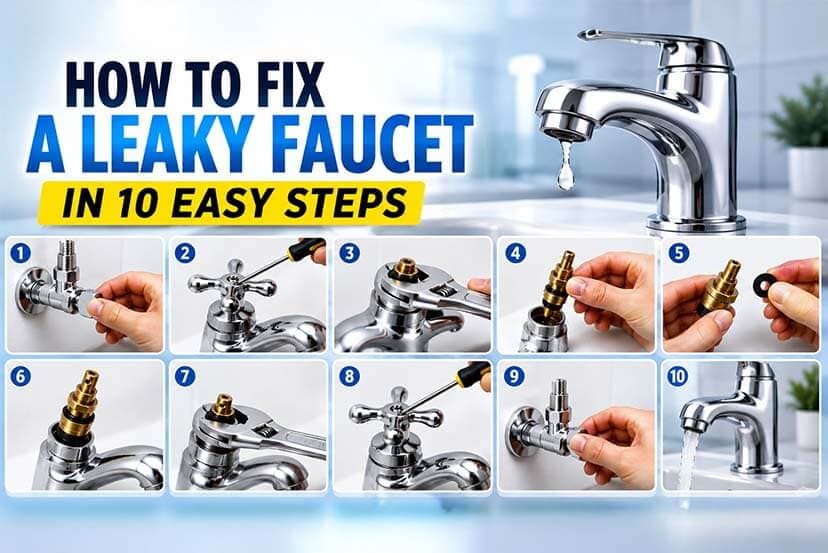
A leaky faucet may appear to be a small household problem, but it can waste thousands of liters of water annually, increase your water bills, and eventually damage your sink or countertop. Fortunately, many faucet leaks can be repaired without hiring a plumber. By identifying the cause and using the right tools, homeowners can fix the most common faucet leaks in less than an hour.
In this guide, you’ll learn the common causes of faucet leaks, essential tools required, step-by-step repair methods, the top 10 tips to fix a leaky faucet, maintenance practices, and when it’s time to replace your faucet altogether.
What is a Leaky Faucet?
A leaky faucet is a tap that continues to drip water even after being turned off. The leak usually occurs because internal components such as washers, O-rings, cartridges, seals, or valve seats have worn out over time.
Ignoring a leaking faucet can lead to:
- Increased water bills
- Water wastage
- Mineral deposits
- Mold and mildew growth
- Rust and corrosion
- Damage to cabinets and countertops
Common Causes of a Leaky Faucet
Before repairing a faucet, it’s important to understand what’s causing the leak.
| Cause | Description |
| Worn-out Washer | Most common reason for compression faucets |
| Damaged O-Ring | Causes leaks around the handle |
| Faulty Cartridge | Common in cartridge faucets |
| Corroded Valve Seat | Mineral buildup damages the sealing surface |
| Loose Parts | Packing nuts or screws becomes loose |
| High Water Pressure | Causes dripping even when closed |
| Broken Ceramic Disc | Common in modern faucets |
| Worn Seals | Rubber seals deteriorate with age |
| Mineral Deposits | Hard water affects internal components |
| Old Faucet | Aging parts become unreliable |
What are the Different Types of Faucets
Understanding your faucet type makes repairs easier.
1. Compression Faucet
- Two separate handles
- Uses rubber washers
- Most common in older homes
Common Repair:
Replace the washer and valve seat.
2. Ball Faucet
- Single handle
- Uses a rotating ball mechanism
- Common in kitchens
Common Repair:
Replace seals and springs.
3. Cartridge Faucet
- Single or double handle
- Uses replaceable cartridge
Common Repair:
Install a new cartridge.
4. Ceramic Disc Faucet
- Modern design
- Highly durable
- Uses ceramic discs
Common Repair:
Replace the ceramic cartridge or clean the seals.
Understand The Tools Required For Fixing A Leaky Faucet
Keep these tools ready before beginning.
- Adjustable wrench
- Screwdriver set
- Allen key
- Slip-joint pliers
- Needle-nose pliers
- Replacement washers
- O-rings
- Faucet cartridge
- PTFE (Teflon) tape
- Silicone plumber’s grease
- Cleaning cloth
- White vinegar
- Small brush
- Bucket
- Flashlight
Step-by-Step: How To Fix a Leaky Faucet
Step 1: Turn Off the Water Supply
Locate the shut-off valves beneath the sink and turn them clockwise. If no local valve is available, turn off the home’s main water supply.
Step 2: Plug the Drain
Use a sink stopper or a cloth to prevent screws and small parts from falling into the drain.
Step 3: Remove the Handle
Unscrew the decorative cap and remove the faucet handle using a screwdriver or Allen key.
Step 4: Inspect Internal Components
Carefully examine:
- Washer
- O-ring
- Cartridge
- Valve seat
- Springs
- Seals
Look for cracks, wear, corrosion, or mineral deposits.
Step 5: Replace Worn Parts
Install new replacement parts that match the faucet model.
Avoid forcing components during installation.
Step 6: Clean Mineral Deposits
Soak removable metal parts in white vinegar for 20–30 minutes to dissolve limescale. Rinse thoroughly before reassembly.
Step 7: Lubricate Moving Parts
Apply silicone plumber’s grease to O-rings and seals to improve movement and extend their lifespan.
Step 8: Reassemble the Faucet
Reinstall all components in the reverse order. Tighten screws securely, but avoid overtightening.
Step 9: Turn On the Water Supply
Slowly reopen the shut-off valves and inspect for leaks while operating the faucet.
Step 10: Test the Faucet
Run both hot and cold water several times. Ensure there is no dripping after turning the faucet off.
Also read: Top 10 Sanitary Ware And Bathroom Fittings Brands In India 2026
Quick Look At The Top 10 Tips to Fix a Leaky Faucet
1. Identify the Faucet Type First
Different faucet designs require different repair methods. Knowing whether you have a compression, cartridge, ball, or ceramic disc faucet helps you choose the correct replacement parts.
2. Always Shut Off the Water Supply
Turning off the water before disassembly prevents flooding and protects your plumbing system.
3. Replace Worn Washers Immediately
Rubber washers naturally wear out over time. Replacing them is one of the quickest and most affordable solutions to stop leaks.
4. Change Damaged O-Rings
A cracked or worn O-ring often causes water to leak around the faucet handle. Replacing it is a simple fix that restores proper sealing.
5. Clean Mineral Deposits
Hard water can leave behind calcium and lime deposits that interfere with faucet operation. Regular cleaning helps maintain smooth performance.
6. Use Genuine Replacement Parts
Choose components that match your faucet’s brand and model. Properly fitting parts improve durability and reduce the chance of recurring leaks.
7. Avoid Overtightening
Applying excessive force when tightening screws or fittings can damage threads, seals, or washers. Tighten only until snug.
8. Apply PTFE (Teflon) Tape Correctly
Wrap PTFE tape neatly around threaded connections to create a secure, leak-resistant seal and prevent water seepage.
9. Lubricate Seals and O-Rings
A thin layer of silicone plumber’s grease reduces friction, protects rubber components, and extends the life of moving parts.
10. Replace Very Old Faucets
If the faucet is heavily corroded, frequently leaks, or has multiple damaged components, replacing the entire unit may be more cost-effective than repeated repairs.
Mistakes to Avoid Before Repairing
Avoid these common errors during repair:
- Forgetting to shut off the water supply
- Losing small screws and springs
- Using incorrect replacement parts
- Overtightening fittings
- Ignoring corrosion
- Mixing up removed components
- Reusing damaged washers
- Skipping lubrication
- Using excessive force
- Not testing after reassembly
Preventive Maintenance Tips to Avoid Leaks In The Future
Regular maintenance helps prevent future leaks and extends faucet life.
- Clean faucets monthly.
- Remove mineral buildup regularly.
- Replace worn seals promptly.
- Inspect for corrosion every six months.
- Avoid excessive force when turning the tap.
- Fix minor drips immediately.
- Check the water pressure if leaks persist.
- Use water softeners in hard-water areas.
When Should You Replace Instead of Repair?
Consider replacing the faucet if:
- It is over 10–15 years old.
- The body is cracked or severely corroded.
- Replacement parts are no longer available.
- Leaks continue after multiple repairs.
- You want improved water efficiency or a modern design.
A new faucet can reduce water consumption, enhance the appearance of your kitchen or bathroom, and provide more reliable performance.
Benefits of Fixing a Leaky Faucet
Repairing a leaking faucet offers several advantages:
- Saves water and reduces utility bills.
- Prevents water damage to cabinets and countertops.
- Extends the lifespan of the faucet.
- Reduces mold and mildew growth.
- Improves overall plumbing efficiency.
- Conserves natural resources through reduced water wastage.
- Avoids costly repairs caused by prolonged leaks.
Conclusion
A leaky faucet is one of the most common household plumbing issues, but it is also one of the easiest to fix with the right approach. By identifying the source of the leak, replacing worn components, and following proper repair techniques, you can restore your faucet’s performance while saving water and reducing utility costs. Regular inspection and preventive maintenance will also help prevent future leaks and extend the life of your plumbing fixtures.
If you’re planning a repair or replacement, invest in high-quality faucets, replacement cartridges, washers, O-rings, PTFE tape, plumber’s grease, and plumbing tools from a trusted platform like Moglix Business to ensure long-lasting and reliable performance.
Frequently Asked Questions (FAQs)
1. What is the most common cause of a leaky faucet?
The most common cause is a worn-out washer or damaged O-ring. Over time, these components deteriorate due to regular use, leading to water leakage.
2. Can I fix a leaky faucet without calling a plumber?
Yes. Many common faucet leaks can be repaired at home with basic tools and the correct replacement parts, making it a suitable DIY project.
3. How long does it take to repair a leaking faucet?
For most standard faucets, the repair takes between 30 minutes and one hour, depending on the faucet type and the availability of replacement parts.
4. Should I repair or replace an old faucet?
If the faucet is severely corroded, frequently leaks, or replacement parts are unavailable, replacing it is often the more practical and cost-effective option.
5. How can I prevent my faucet from leaking again?
Regular cleaning, replacing worn seals promptly, avoiding excessive force when operating the handle, and inspecting the faucet periodically can help prevent future leaks.