









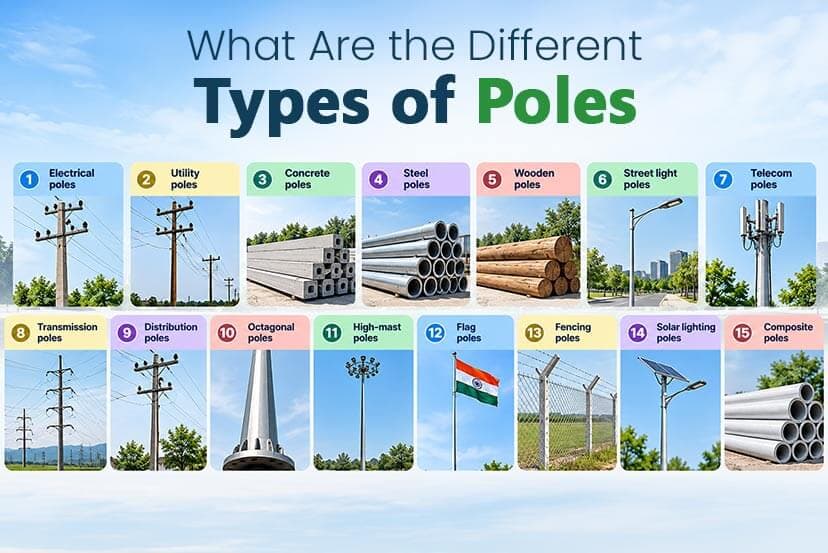
Poles are vertical structures used across electrical distribution, telecommunications, street lighting, construction, agriculture, fencing, and infrastructure projects. They are designed to support electrical cables, communication lines, lighting fixtures, signs, fencing systems, and other equipment. Depending on the application, poles can be manufactured from materials such as steel, concrete, aluminium, wood, or composite materials.
Choosing the right type of pole depends on several factors, including load capacity, height, material, installation location, environmental conditions, durability, and intended application. If you are looking to procure poles in bulk at wholesale prices, you can simply purchase them at Moglix Business.
For example, an electrical distribution pole must safely support conductors and electrical equipment, while a street light pole primarily needs to provide adequate height and stability for lighting fixtures. This guide explains the different types of poles, their materials, applications, advantages, and important selection factors.
What Is a Pole?
A pole is a vertical structural member installed to support or carry equipment, cables, wires, lights, signs, or other infrastructure components. Poles are commonly used in power transmission and distribution, telecommunications, street lighting, construction, agriculture, fencing, and industrial applications.
Poles are generally classified according to their material, design, shape, and application. Common examples include electrical poles, concrete poles, steel poles, street light poles, utility poles, telecom poles, and fencing poles.
What Are the Different Types of Poles?
The main types of poles include:
- Electrical poles
- Utility poles
- Concrete poles
- Steel poles
- Wooden poles
- Street light poles
- Octagonal poles
- Fencing poles
- Solar lighting poles
- Telecom poles
- Transmission poles
- Distribution poles
- High-mast poles
- Flag poles
- Composite poles
Each type is designed for a particular structural and operational requirement.
Elaboration Of Every Specific Type Of Pole For Better Understanding
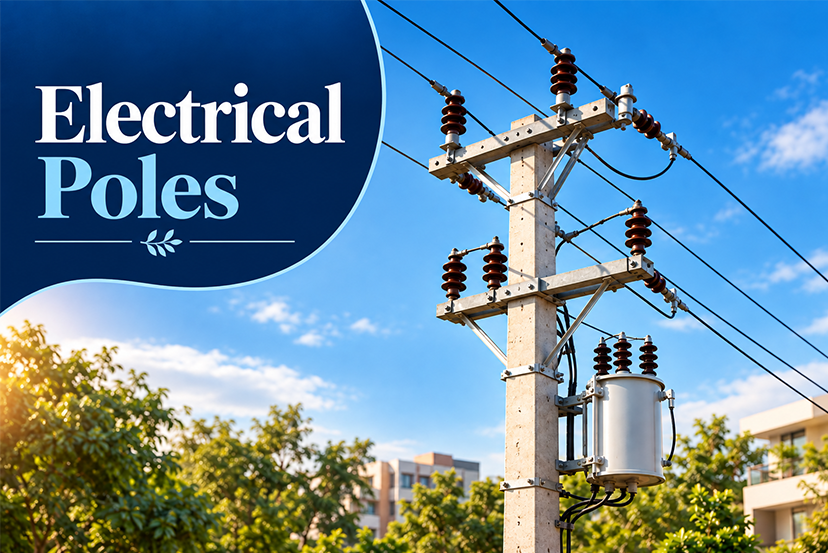
1. Electrical Poles
Electrical poles are used to support overhead electrical conductors and associated equipment. They are commonly installed along roads, residential areas, industrial sites, and rural locations for electricity distribution.
Electrical poles may be manufactured from reinforced concrete, steel, wood, or composite materials. Their dimensions and load-bearing capacity depend on the voltage level, conductor arrangement, span length, and equipment installed on the pole.
Applications:
- Overhead electricity distribution
- Supporting electrical cables
- Distribution transformers
- Insulators and electrical accessories
- Rural and urban power networks
When selecting an electrical pole, consider its height, mechanical strength, working load, foundation requirements, and electrical network configuration.
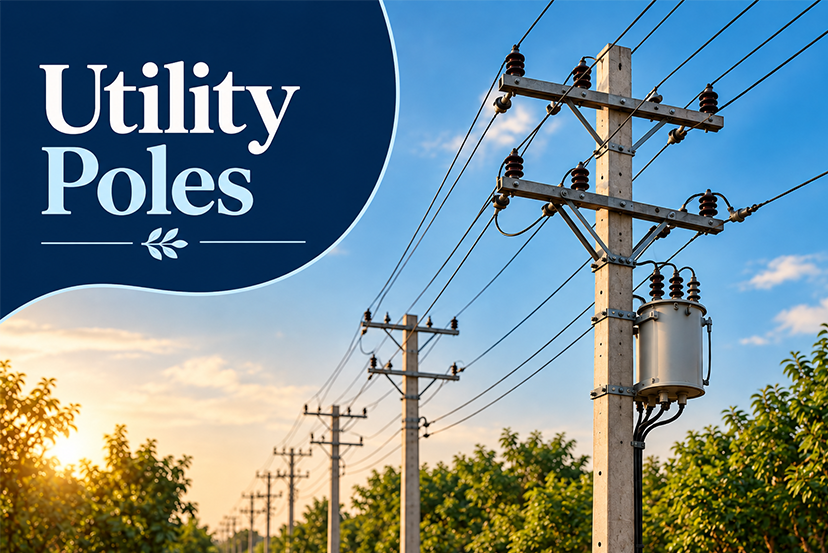
2. Utility Poles
Utility poles are general-purpose support structures used by utility companies to carry different overhead services. A single utility pole may support electrical conductors, telephone cables, fibre-optic lines, streetlights, and other infrastructure.
Utility poles are particularly common in urban and rural utility networks.
Common materials include:
- Concrete
- Steel
- Wood
- Fiberglass or composite materials
The appropriate material depends on environmental conditions, expected loads, maintenance requirements, and service life.

3. Concrete Poles
Concrete poles are manufactured using concrete, usually reinforced with steel to improve their structural strength. They are widely used for electrical distribution and utility applications because of their resistance to weather, moisture, insects, and corrosion-related deterioration. Concrete poles can be designed in different shapes and dimensions depending on the application.
Advantages of concrete poles:
- High structural strength
- Long service life
- Good resistance to weather
- Low susceptibility to termites
- Suitable for electrical distribution
- Relatively low routine maintenance
Prestressed concrete poles are also used where higher strength and controlled structural performance are required.
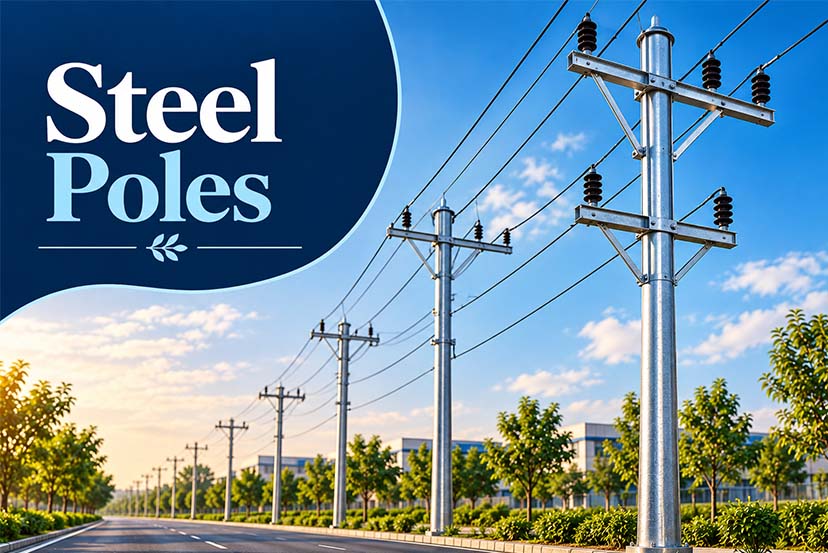
4. Steel Poles
Steel poles are manufactured from structural steel and are widely used where high strength and a relatively lightweight structure are required. They are commonly used for street lighting, electrical distribution, traffic infrastructure, signage, and industrial applications.
Steel poles may have circular, octagonal, tapered, or other cross-sectional designs. A protective coating such as galvanization can be used to improve resistance to corrosion, particularly in outdoor environments.
Common applications include:
- Street lighting
- Highway lighting
- Electrical distribution
- Traffic signals
- Signboards
- Industrial infrastructure

5. Wooden Poles
Wooden poles have traditionally been used for electrical and telecommunication networks. They are relatively lightweight and can be easier to handle and install than some heavier pole materials. Wood poles generally require suitable treatment to improve resistance to moisture, insects, fungal decay, and environmental exposure.
Applications include:
- Electrical distribution
- Telephone networks
- Rural utility infrastructure
- Temporary utility installations
Their suitability depends heavily on the type and treatment of wood, local environmental conditions, and required service life.

6. Street Light Poles
Street light poles are designed specifically to support lighting fixtures used on roads, highways, parking areas, campuses, industrial facilities, parks, and public spaces. They are commonly manufactured from galvanized steel, aluminium, or other corrosion-resistant materials.
Street light poles are available in different configurations, including:
- Single-arm poles
- Double-arm poles
- Decorative poles
- Octagonal poles
- Conical poles
- High-mast poles
The pole height and arm configuration are selected based on the lighting layout, road width, mounting height, and required illumination.

7. Telecom Poles
Telecom poles are used to support telecommunications infrastructure such as telephone cables, fibre-optic cables, communication lines, and associated equipment. They must provide adequate mechanical support while maintaining appropriate clearances between communication cables and other utilities.
Common applications:
- Fibre-optic networks
- Telephone lines
- Broadband infrastructure
- CCTV networks
- Communication cables
Depending on the network design, telecom poles may be made from steel, concrete, wood, or composite materials.
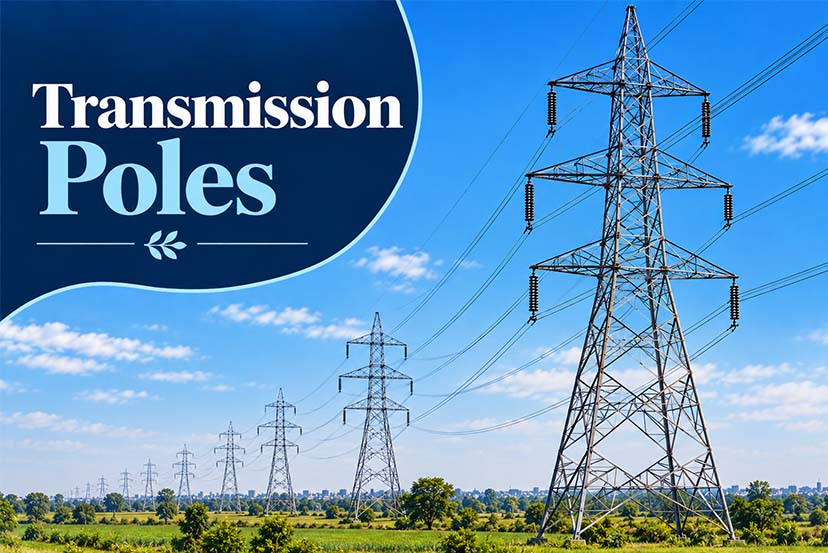
8. Transmission Poles
Transmission poles are used to support high-voltage transmission lines that transport electricity over long distances. These poles are generally taller and structurally stronger than standard distribution poles. Transmission structures may use steel or reinforced concrete, depending on the voltage, span, terrain, and network design.
Important considerations include:
- Conductor weight
- Wind loading
- Line voltage
- Span length
- Insulator arrangement
- Ground clearance
- Structural strength
For very high-voltage networks, lattice towers are also commonly used instead of conventional poles.

9. Distribution Poles
Distribution poles are used in electrical distribution networks to carry electricity from substations toward homes, commercial buildings, and industrial consumers. They generally support low-, medium-, or other distribution-voltage conductors, depending on the electrical network.
Distribution poles can carry:
- Conductors
- Insulators
- Transformers
- Switches
- Lightning arresters
- Communication cables
The pole specification must match the mechanical and electrical requirements of the distribution system.

10. Octagonal Poles
Octagonal poles have an eight-sided cross-sectional design. They are frequently manufactured from steel and are commonly used in lighting and infrastructure applications.
The octagonal shape can provide a useful combination of structural strength, weight efficiency, appearance, and ease of fabrication.
Applications include:
- Street lighting
- Highway lighting
- Parking-area lighting
- Industrial lighting
- Outdoor area lighting
Octagonal poles are available in different heights, wall thicknesses, base configurations, and arm arrangements.

11. High-Mast Poles
High-mast poles are tall lighting structures designed to illuminate large areas from a significant height. They are commonly installed where a large area needs uniform illumination using fewer lighting structures.
Typical applications include:
- Highways
- Airports
- Stadiums
- Ports
- Industrial plants
- Large parking areas
- Logistics and warehousing facilities
High-mast poles may incorporate multiple luminaires mounted around the top of the structure. Some designs use lowering systems that allow lighting equipment to be brought down for maintenance.

12. Flag Poles
Flag poles are vertical structures designed to display flags. They are commonly installed outside government buildings, corporate offices, schools, hotels, institutions, commercial facilities, and public spaces.
Flag poles may be manufactured from aluminium, steel, fiberglass, or other suitable materials.
Important factors include pole height, flag dimensions, wind conditions, mounting system, and installation foundation.

13. Fencing Poles
Fencing poles, also called fence posts, provide the structural framework for fencing systems. They are used with wire mesh, chain-link fencing, barbed wire, welded mesh, agricultural fencing, and security fencing.
Depending on the application, fencing poles may be made from:
- Galvanized steel
- Mild steel
- Concrete
- Wood
- PVC or composite materials
The required pole spacing and foundation depend on fence height, mesh type, wind exposure, and security requirements.

14. Solar Lighting Poles
Solar lighting poles support solar-powered outdoor lighting systems. These poles generally accommodate a solar panel, LED lighting fixture, battery system, controller, and associated wiring.
They are used in areas where grid-connected lighting may be difficult or where standalone renewable-energy lighting is preferred.
Applications include:
- Roads
- Rural pathways
- Parking areas
- Parks
- Industrial premises
- Campuses
- Remote locations
The pole height and structural design must account for the additional wind load created by the solar panel.

15. Composite Poles
Composite poles are manufactured using materials such as fiberglass-reinforced polymers (FRP) or other engineered composites. They are designed for applications where lightweight construction, corrosion resistance, and durability are important.
Composite poles can be considered for:
- Utility networks
- Telecom infrastructure
- Street lighting
- Coastal environments
- Corrosive industrial locations
One potential advantage is their resistance to corrosion compared with conventional metallic structures, although application-specific structural requirements should always be evaluated.
How to Choose the Right Pole?
Selecting a pole requires consideration of both the application and the installation environment. The following factors should be evaluated:
1. Application: First determine whether the pole will be used for electricity distribution, lighting, telecommunications, fencing, signage, solar lighting, or another purpose.
2. Pole Height: Pole height determines cable clearance, lighting coverage, equipment mounting height, and overall installation requirements.
3. Load Capacity: Check the expected vertical and horizontal loads, including the weight of cables, fixtures, transformers, signs, solar panels, and other equipment.
4. Material: Choose the material based on required strength, corrosion resistance, weight, maintenance requirements, environmental exposure, and expected service life.
5. Wind Load: Outdoor poles must withstand wind forces. This is particularly important for streetlights, solar panels, signs, high-mast structures, and communication equipment.
6. Corrosion Resistance: For coastal, humid, chemical, or industrial environments, corrosion-resistant materials or protective coatings can help extend service life.
7. Foundation and Installation: The pole must be compatible with the proposed foundation and installation method. Soil conditions, embedment depth, anchor arrangements, and site constraints can influence the final selection.
8. Standards and Specifications: For electrical and structural applications, poles should be selected according to the applicable Indian Standards (IS), utility specifications, project requirements, and relevant structural codes.
Key Factors to Consider Before Buying Poles
Before purchasing poles for an infrastructure or industrial project, consider the following:
- Pole material
- Overall height
- Diameter or cross-section
- Wall thickness
- Load-bearing capacity
- Wind-load rating
- Corrosion protection
- Mounting arrangement
- Foundation requirements
- Installation method
- Applicable standards
- Quantity required
- Site and environmental conditions
For bulk procurement, buyers can procure them at Moglix Business and should also compare technical specifications, manufacturer credentials, product quality, delivery timelines, warranty terms, and overall procurement cost.
Conclusion
Poles are essential components of modern electrical, communication, lighting, security, and infrastructure systems. From concrete and steel electrical poles to telecom, street light, high-mast, solar, fencing, and composite poles, each type serves a specific purpose. The right pole should be selected based on application, material, height, load capacity, wind conditions, corrosion resistance, installation requirements, and applicable standards.
For industrial and infrastructure projects, evaluating technical specifications and site conditions before procurement can help ensure reliable and long-term performance. For businesses looking for poles in bulk, comparing pole specifications, materials, dimensions, manufacturers, pricing, and procurement requirements can help streamline sourcing for electrical, lighting, construction, utility, and infrastructure projects.
Frequently Asked Questions
What are the main types of poles?
The main types include electrical poles, utility poles, concrete poles, steel poles, wooden poles, street light poles, telecom poles, transmission poles, distribution poles, high-mast poles, octagonal poles, solar lighting poles, fencing poles, and composite poles.
Which pole is used for electricity distribution?
Concrete, steel, and wooden poles can be used for electricity distribution. The appropriate type depends on the voltage, conductor arrangement, load requirements, span, environmental conditions, and utility specifications.
Which pole is commonly used for street lights?
Steel poles are widely used for street lighting because they can provide the required structural strength and can be manufactured in different heights, shapes, and arm configurations. Aluminium and other materials are also used for specific applications.
What are concrete poles used for?
Concrete poles are commonly used for electrical distribution, utility networks, telecommunications, and infrastructure applications where high structural strength and durability are required.
What is a high-mast pole?
A high-mast pole is a tall lighting structure used to illuminate large areas such as highways, airports, ports, stadiums, industrial sites, and large parking areas.
What is an octagonal pole?
An octagonal pole is a pole with an eight-sided cross-section, commonly manufactured from steel and used for street lighting, highway lighting, industrial lighting, and outdoor illumination.
What is the difference between a utility pole and an electrical pole?
A utility pole is a broader category of support structure that can carry different utility services, including electricity and telecommunications. An electrical pole is primarily associated with supporting electrical distribution or related electrical infrastructure.
Are steel poles better than concrete poles?
Steel and concrete poles have different properties and applications. Steel generally offers high strength and design flexibility, while concrete provides durability and resistance to several environmental factors. The suitable option depends on the project’s load, environment, installation, maintenance, and design requirements.