









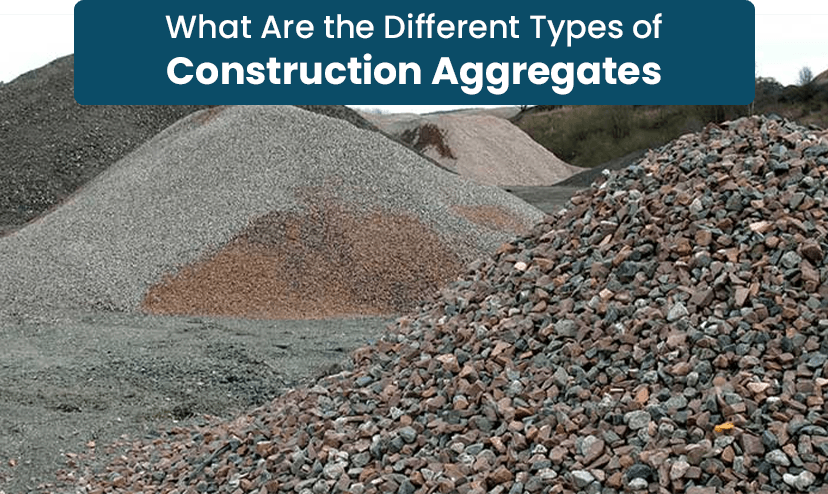
Construction aggregates are extremely important materials that are used to produce strong, durable and long-lasting infrastructure. Whether they are residential buildings, commercial complexes or highways, bridges, and drainage – aggregates can help make your construction stronger, stable roads and meet the needs of your project.
What types of aggregates are there?
Aggregates for construction can generally be separated into four categories. Fine aggregates, coarse aggregates, natural aggregates, and recycled aggregates.
In this guide, we will look at the main types of construction aggregates, what they can be used for and the benefits they provide. We will also look at what to consider when choosing the right material for your next project.
What Are Construction Aggregates?
Construction aggregates are materials such as sand, gravel, crushed stone and recycled concrete. They are used during construction. It is a key part of concrete, mortars, asphalt, roads, foundations and drainage.
Cement, water and other materials can be mixed with aggregates to produce concrete and other construction materials. Aggregates will provide bulk to the concrete and aid with improving load bearing. In addition, they will reduce shrinkage and improve durability.
Understand the Different Types of Construction Aggregates?
Based on the requirements of the construction business and industries, we have provided an important list of different types sof construction aggregates that remain in demand.
Fine Aggregates
These types of construction and fine aggregates consist of small particles that can easily pass through a 4.75 mm sieve. They help in filling the gaps in coarse aggregates and enhance the overall workability. Fine aggregates are known for improving the consistency during concrete mixing and mortar.
- Some uses of fine aggregates are:
- Producing cement mortars for brick laying and plastering.
- Producing concrete for domestic and commercial construction.
- Filling joints and gaps.
- Creating floor screeds and masonry mixtures.
- Used for some landscaping and levelling purposes.
Coarse Aggregates
Large-size aggregates are those which are usually left behind on a sieve of 4.75 mm. Crushed stone is one example of coarse aggregate. Common sizes of coarse aggregates are 10mm, 20mm, 40mm.
Coarse aggregates provide coarse particle skeleton to the concrete mix. They provide strength and stability to the concrete.
Applications of Coarse Aggregate:
- Reinforced cement concrete (RCC) structures
- Foundations, Columns, Beams and Slabs of buildings
- Roads
- Bridges, Retaining Walls and other structures
- Blocks and prefabricated concrete items
Natural Aggregates
They are primarily derived from various types sof natural resources, which include sand deposits in river beds and gravel pits. River sand and gravel are a common natural aggregate. Depending on the geology, they can be more rounded or irregular in shape.
Uses:
- Used in making concrete and mortars
- Used as a sub-base in roads
- Landscaping and paving
- Drainage layers
- General construction
They will require checking to ensure they are of suitable quality for the application. The aggregate should be extracted following relevant environmental regulations.
Crushed Stone Aggregates
Crushed stone aggregates are produced by crushing larger stones such as granite, basalt, limestone or suitable stone into smaller pieces. The angular shape and coarse surface provide good locking properties which makes it a popular material to use in structural concrete, road construction and in load bearing applications.
Common uses of Crushed stone aggregates include:
- Concrete and structural foundations.
- Roads and highways.
- Railways (ballast) to specification.
- Foundations and drainage.
- Industrial floors and paving.
Gravel Aggregates
Gravel is a naturally occurring aggregate of rock fragments. These fragments tend to be smooth or partially smooth as they have been weathered and eroded. The gravel can be sieved into various sizes for use in different construction applications.
Gravel can be used to help make the concrete more workable due to the smooth nature of the particles when compared to angular crushed stone. However, the shape of the gravel will affect the bond within the mix and other mix properties.
Applications of gravel aggregate include:
- Concrete and non-structural construction.
- Driveways, paths and paving.
- Drainage channels and filter media.
- Landscaping.
- Road building and sub-base.
Recycled Aggregates
Recycled aggregates come from construction and demolition materials such as concrete, masonry and some road materials. These are crushed and sieved to be reused. This helps create a sustainable construction by creating less demand for raw materials and allows suitable materials to be taken out of landfill.
Typical uses for recycled aggregate:
- Sub-base/pavement layers.
- Filling and levelling.
- Landscaping and some drainage.
- Non-structural concrete.
- Some structural concrete where specification and testing will allow.
The quality of recycled aggregates can vary depending on what it was sourced from and how it has been processed. They will need to be tested for contamination, water absorption, strength and other factors.
Lightweight Aggregates
Lightweight aggregates are lower density products that can be either artificial, manufactured from expanded clay, shale, slate etc., or natural sources of lightweight minerals. They can be used to help reduce the self-weight of concrete. Depending on the type used they can also provide thermal insulation.
Common uses of lightweight aggregates include:
- Blocks and panels of lightweight concrete.
- Insulation to roofs and floor screeds.
- Precast concrete elements.
- Structural lightweight concrete.
- Some landscape and horticulture applications.
If it is important to help reduce the dead load of a structure then lightweight aggregates can be very beneficial.
Heavyweight Aggregates
Heavyweight aggregates are high-density materials commonly used in construction. Typical materials are barite, magnetite & hematite. They are used within projects that need high-density concrete. This can often be to provide radiation protection or specialist structural properties.
Typical uses:
- Radiation protection concrete within medical facilities.
- Nuclear and research facilities.
- Specialist industrial structures.
- Counterweights and engineering applications using high-density concrete.
Types of Construction Aggregates Based on Size
One of the most important factors when considering aggregate is the size. This will affect the workability of the concrete, void content, strength gain, and applicability to different elements. Let’s go through the aggregates mentioned below, which are basically compared based on their sizes.
- Fine Aggregate: Typically sized so it passes through a 4.75mm sieve. An example would be construction sand.
- 10mm Aggregate: Often used in concrete mixes that require smaller-sized aggregates. This can be used in some thin section and precast applications.
- 20mm Aggregate: This is commonly used in general reinforced concrete. This depends on the design.
- 40mm Aggregate: This type of construction aggregate is primarily used in mass production of concrete for foundation work and other types of construction applications.
- Graded Aggregates: This is a combination of different-sized aggregates. This helps provide the correct grading and reduces voids. This can be used in road bases.
Conclusion: Where Can You Buy Construction Aggregates In Bulk?
Before finalizing the different types of construction aggregates, it is necessary to understand their use case, know the differences between them, and finally opt for a specific one based on project requirements. You can chekc the size, origin, source, and even distinctiveness in terms of quality to improve the right selection of aggregates.
For construction businesses and industries looking to buy aggregates in bulk at wholesale prices, Moglix Business is the one-stop destination to procure them at the most effective cost. We ensure delivery from reliable sources across India.