








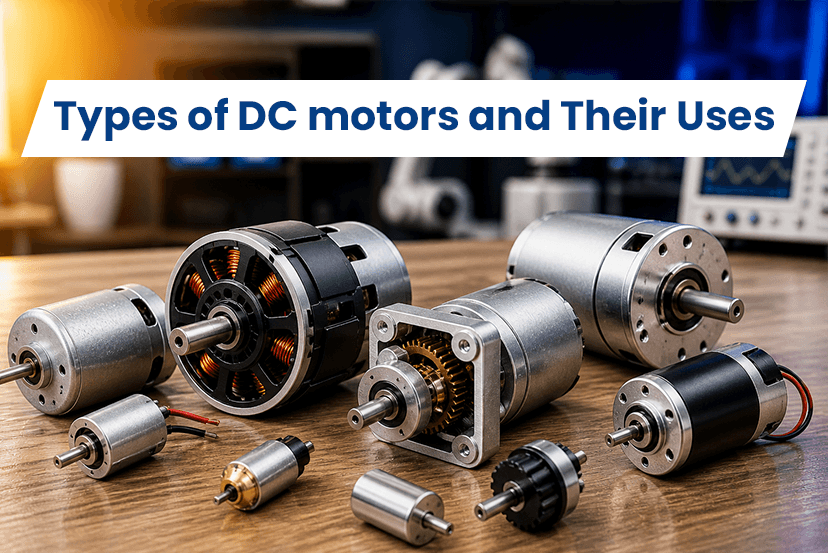
Direct Current (DC) motors are one of the most widely used electrical machines in industrial, commercial, and residential applications. They are known for offering simplicity, reliability, and precise speed control. DC motors play a crucial role in powering everything from small electronic devices to heavy industrial machinery.
Understanding the different types of DC motors, their working principles, importance, and applications can help businesses and individuals choose the right motor for their specific needs. In this blog, we’ll explore the various types of DC motors in detail, along with their key uses and benefits.
What is a DC Motor?
A DC motor is an electrical machine that converts direct current (DC) electrical energy into mechanical energy. It operates based on the principle that when a current-carrying conductor is placed in a magnetic field, it experiences a force that causes rotation.
Basic Components of a DC Motor
- Armature (Rotor): Rotating part of the motor
- Field Windings (Stator): Produce the magnetic field
- Commutator: Converts DC into pulsating current
- Brushes: Maintain electrical contact with the commutator
Understand the various Types of DC Motors
DC motors are primarily classified based on how the field winding is connected to the armature. Below are the main types:
1. Series DC Motor
In a series DC motor, the field winding is connected in series with the armature winding.
Key Features
- High starting torque
- Speed varies with load
- Simple construction
Advantages
- Ideal for heavy load applications
- Strong initial torque
Disadvantages
- Speed control is difficult
- Can be damaged if run without a load
Applications
- Electric trains
- Cranes and hoists
- Elevators
- Automobile starters
2. Shunt DC Motor
In a shunt DC motor, the field winding is connected in parallel (shunt) with the armature.
Key Features
- Constant speed operation
- Good speed regulation
- Moderate starting torque
Advantages
- Stable performance
- Easy speed control
Disadvantages
- Lower starting torque compared to series motors
Applications
- Lathes
- Fans and blowers
- Conveyors
- Industrial machinery
3. Compound DC Motor
A compound DC motor combines both series and shunt windings to achieve the benefits of both.
Types of Compound Motors
- Cumulative Compound Motor: Series and shunt fields support each other
- Differential Compound Motor: Fields oppose each other
Key Features
- High starting torque
- Better speed regulation than series motors
Advantages
- Balanced performance
- Suitable for varying loads
Disadvantages
- More complex design
- Higher cost
Applications
- Rolling mills
- Press machines
- Elevators
- Heavy-duty conveyors
4. Permanent Magnet DC Motor (PMDC)
This type uses permanent magnets instead of field windings to create magnetic fields.
Key Features
- Compact and lightweight
- No field winding losses
- Energy-efficient
Advantages
- Simple design
- Low maintenance
Disadvantages
- Limited power capacity
- Expensive magnets
Applications
- Toys
- Automotive systems (wipers, power windows)
- Small appliances
- Robotics
5. Brushless DC Motor (BLDC)
Brushless DC motors use electronic commutation instead of brushes and commutators.
Key Features
- High efficiency
- Long lifespan
- Low noise
Advantages
- No brush wear
- Better speed control
- High reliability
Disadvantages
- Higher initial cost
- Requires an electronic controller
Applications
- Electric vehicles (EVs)
- Drones
- HVAC systems
- Computer cooling fans
6. Separately Excited DC Motor
In this motor, the field winding is powered by a separate external DC source.
Key Features
- Independent control of the field and armature
- Precise speed control
Advantages
- Wide speed range
- Better performance under varying loads
Disadvantages
- Requires an additional power supply
- More complex setup
Applications
- Industrial drives
- Testing labs
- Steel manufacturing
Quick Look at the Importance of DC Motors
1. Precise Speed Control
DC motors provide smooth and accurate speed regulation by simply adjusting the input voltage or current. This makes them highly suitable for applications like robotics, conveyors, and machine tools where controlled motion is essential.
2. High Starting Torque
DC motors, especially series and compound types, deliver strong torque right from the starting point. This capability is crucial for heavy-duty applications such as cranes, elevators, and hoisting equipment.
3. Energy Efficiency
Modern DC motors, particularly brushless types, are designed to minimize energy losses and improve performance. They consume less power while delivering higher output, making them cost-effective for long-term usage.
4. Compact Design
DC motors are generally compact and lightweight, allowing easy integration into small and portable devices. This makes them ideal for applications in electronics, automotive components, and handheld equipment.
5. Wide Range of Applications
DC motors are used across various industries, from household appliances to large-scale industrial machinery. Their versatility and adaptability make them a preferred choice for both simple and complex operations.
Uses of DC Motors Across Industries
1. Industrial Applications
- Conveyor belts
- Rolling mills
- Machine tools
- Packaging equipment
2. Automotive Industry
- Electric vehicles
- Windshield wipers
- Power steering systems
- Starter motors
3. Household Applications
- Fans
- Mixers and grinders
- Washing machines
- Vacuum cleaners
4. Robotics and Automation
- Robotic arms
- CNC machines
- Automated guided vehicles (AGVs)
5. Renewable Energy Systems
- Solar-powered devices
- Wind turbines (small-scale)
6. Healthcare Equipment
- Medical pumps
- Surgical tools
- Diagnostic machines
Factors to Consider When Choosing a DC Motor
1. Power Requirement
Select a motor based on the load and required output power.
2. Speed Control
Choose motors like shunt or BLDC if precise speed control is needed.
3. Torque Requirement
For high torque applications, go for series or compound motors.
4. Efficiency
BLDC motors are best for energy-saving applications.
5. Maintenance
Brushless motors require less maintenance compared to brushed motors.
6. Cost
Consider both initial cost and long-term operational expenses.
Advantages of DC Motors
- Easy speed control
- High efficiency
- Reliable performance
- Compact size
- Wide usability
Disadvantages of DC Motors
- Brushes require maintenance (in brushed motors)
- Higher initial cost for advanced types
- Not suitable for very high-power applications (in some cases)
Future of DC Motors
With advancements in technology, DC motors, especially BLDC motors, are becoming more popular in modern applications such as electric vehicles, smart home devices, and industrial automation. The growing demand for energy-efficient and sustainable solutions is further driving innovation in DC motor design and performance.
Conclusion
DC motors are a fundamental part of modern engineering and technology. From simple household appliances to complex industrial machinery, their versatility and efficiency make them indispensable. Understanding the different types of DC motors, such as series, shunt, compound, PMDC, BLDC, and separately excited motors help in selecting the right motor for specific applications. So, if you are looking to buy motors in bulk, you can simply partner with Moglix Business and procure them easily at the most effective prices. Whether you are in manufacturing, automation, or electronics, choosing the right DC motor can significantly impact performance, efficiency, and operational costs.
FAQs
What is the DC motor?
A DC motor is an electrical machine that converts direct current (DC) electrical energy into mechanical energy. It operates by using magnetic fields to produce rotational motion.
What are the 4 types of DC motors?
The four main types are series DC motor, shunt DC motor, compound DC motor, and permanent magnet DC motor. Each type differs based on field winding configuration and performance characteristics.
How are DC motors used?
DC motors are widely used in applications like electric vehicles, cranes, conveyors, and household appliances. They are preferred where precise speed control and high starting torque are required.
What is the basic principle of a DC motor?
A DC motor works on the principle that a current-carrying conductor placed in a magnetic field experiences a force. This force creates torque, causing the motor shaft to rotate.