








Biomass pellets are becoming one of the most practical and eco-friendly fuel options for homes, industries, and commercial heating systems. As energy costs continue to rise and sustainability becomes more important, many businesses and households are switching to biomass fuel pellets as an efficient alternative to coal, firewood, and other traditional fuels. These compact fuel sources are made from agricultural by-products or waste materials and are widely used for heating, power generation, and industrial applications.
In this article, we will explore what biomass pellets are, how they are made, their various types, uses, advantages, and the reasons behind their growing popularity in India and worldwide.
What Are Biomass Pellets?
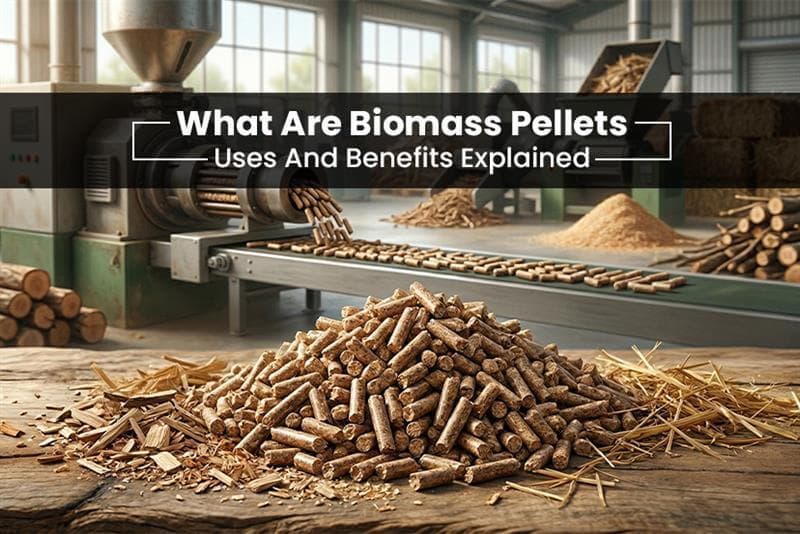
Biomass pellets are compressed cylindrical fuel units manufactured using various agricultural waste or by-products of sawdust, wood chips, rice husk, straw, bagasse, peanut shells, Mustard stalk, Groundnut shells, and other agricultural residues. Biomass pellets are mainly used in industrial boilers, power plants, furnaces, and heating systems. They are among the most energy-efficient fuel sources and are known for their low carbon emissions, easy storage, and low mixture content. Biomass pellets are considered eco-friendly and cost-effective renewable energy solutions.
How Biomass Pellets Are Made
The manufacturing process of biomass pellets is designed to convert loose agricultural waste into dense and energy-rich fuel.
Step-by-Step Process of Biomass Pellet Production
1. Collection of Raw Material
Agricultural waste or wood waste is collected from farms, sawmills, or industrial sources.
2. Drying
The raw material is dried to reduce moisture content. This is important because lower moisture improves combustion efficiency.
3. Grinding
The dried material is crushed into fine particles for smooth pellet formation.
4. Pelletizing
The powder-like material is compressed using a biomass pellet machine or pellet mill. High pressure and heat bind the material naturally without requiring many chemical additives.
5. Cooling
Freshly made pellets are hot and soft, so they are cooled to make them hard and durable.
6. Packaging and Storage
After cooling, pellets are packed in bags or stored in bulk for transport and usage.
This process helps transform waste into a valuable energy source with better burning properties.
Common Raw Materials Used for Biomass Pellets
One of the biggest advantages of biomass pellet production is that it uses materials that are often treated as waste.
Popular Biomass Pellet Raw Materials
- Wood sawdust
- Pine wood waste
- Rice husk
- Wheat straw
- Corn cobs
- Sugarcane bagasse
- Groundnut shells
- Coconut shells
- Mustard stalk
- Bamboo dust
These raw materials are chosen based on local availability, energy value, moisture content, and ash production.
In India, agricultural residue pellets are especially popular because of the large quantity of farm waste generated every year.
What are the Types of Biomass Pellets?
Biomass pellets can be categorized based on the material used and their end application.
A. Wood Pellets
These are made from sawdust, wood chips, and wood shavings. They are commonly used for residential heating and commercial boilers.
Features:
- High calorific value
- Low ash content
- Cleaner burning
B. Agricultural Biomass Pellets
These are produced from crop residue such as rice husk, wheat straw, bagasse, and stalks.
Features:
- Cost-effective
- Easily available in farming regions
- Suitable for industrial boilers and furnaces
What are the Uses of Biomass Pellets?
Biomass pellets are highly versatile and are used across several sectors due to their efficiency and convenience.
A. Industrial Boilers
One of the most common uses of biomass pellets is in industrial boilers for generating steam and heat.
Used In:
- Textile industries
- Food processing units
- Chemical plants
- Paper mills
- Ceramic industries
Biomass pellets are often used as a replacement for coal and furnace oil.
B. Power Generation
Many thermal and captive power plants use biomass pellets for generating electricity.
Why Used:
- Renewable fuel source
- Lower carbon emissions
- Supports cleaner energy production
C. Residential Heating
In colder countries, wood biomass pellets are used in pellet stoves, central heating systems, and fireplaces.
Common Residential Uses:
- Room heating
- Water heating
- Cooking applications
D. Commercial Heating
Hotels, schools, hospitals, and commercial buildings can use pellet-based heating systems to reduce fuel expenses.
E. Cooking and Community Kitchens
In some rural and semi-urban areas, biomass pellets are used in specially designed pellet stoves for cooking.
F. Brick Kilns and Furnaces
Biomass pellets are also used in furnaces, ovens, and kilns where high heat is required.
Understand the Benefits of Biomass Pellets
There are several reasons why biomass pellets are considered smart fuel alternatives.
A. Eco-Friendly Fuel
One of the biggest benefits of biomass pellets is that they are made from renewable agricultural waste.
Environmental Advantages:
- Reduces agricultural waste burning
- Helps lower carbon footprint
- Supports waste recycling
- Produces fewer harmful emissions than coal
B. High Combustion Efficiency
Biomass pellets have lower moisture and a uniform shape, which allows them to burn efficiently and consistently.
Advantages:
- Better heat output
- Stable flame
- Reduced fuel wastage
C. Easy Storage and Handling
Unlike loose biomass such as straw or husk, pellets are compact and easy to transport.
Storage Benefits:
- Require less storage space
- Cleaner to handle
- Less dust and mess
D. Cost-Effective Fuel Option
In many industrial applications, biomass pellets offer lower operating costs compared to fossil fuels.
Cost Benefits:
- Reduced fuel bills
- Lower maintenance in some systems
- Better fuel efficiency per unit
E. Supports Renewable Energy Goals
Using biomass pellets helps industries and institutions move toward cleaner and more sustainable energy practices.
F. Consistent Quality
Since pellets are processed and standardized, they offer more predictable performance than raw biomass.
Biomass Pellets vs Traditional Fuels
To understand their practical value, it helps to compare biomass pellets with conventional fuels.
| Feature | Biomass Pellets | Coal | Firewood | Furnace Oil |
| Source | Renewable | Non-renewable | Renewable | Non-renewable |
| Moisture | Low | Moderate | High | Low |
| Emissions | Lower | High | Moderate | High |
| Handling | Easy | Moderate | Difficult | Easy |
| Storage | Compact | Bulkier | Bulky | Tank storage |
| Sustainability | High | Low | Moderate | Low |
Why Biomass Pellets Are Growing in India:
- Availability of farm residue
- Push for renewable fuel alternatives
- Need to reduce stubble burning
- Rising industrial energy costs
- Government focus on cleaner energy
In many states, biomass pellet use is also being encouraged as a way to reduce pollution caused by the open burning of crop residue.
Conclusion
Biomass pellets are a practical, efficient, and eco-friendly fuel made from compressed agricultural and wood waste. They offer a smart alternative to traditional fuels like coal, firewood, and furnace oil. With applications in industrial heating, power generation, commercial systems, and even household use, biomass pellets are playing an important role in the shift toward sustainable energy. If you are looking to buy biofuel pellets in bulk at the most competitive prices, the Moglix business is the right platform to partner with. We manufacture top-quality and best biofuel pellets and biomass briquettes and ensure the procurement at wholesale prices.
Frequently Asked Questions
1. What are biomass pellets made of?
Biomass pellets are made from compressed agricultural materials such as sawdust, rice husk, bagasse, wood chips, and agricultural residue.
2. What are biomass pellets used for?
They are used in industrial boilers, power plants, furnaces, pellet stoves, commercial heating systems, and cooking applications.
3. Are biomass pellets eco-friendly?
Yes, biomass pellets are considered eco-friendly because they are made from renewable waste materials and produce fewer emissions than many fossil fuels.
4. Are biomass pellets better than coal?
In many cases, yes. Biomass pellets offer cleaner burning, lower emissions, easier handling, and more sustainable than coal.
5. Can biomass pellets be used in industries?
Yes, biomass pellets are widely used in industries for steam generation, heating, and power production.
6. Do biomass pellets save money?
They can help reduce fuel costs, especially in industrial and commercial settings where energy efficiency and bulk usage matte