








Roof waterproofing is one of the most critical aspects of building maintenance and construction. Whether it’s a residential home, commercial building, or industrial structure, protecting the roof from water damage ensures long-term durability and safety. Waterproofing chemicals play a vital role in preventing leakage, dampness, and structural deterioration caused by moisture.
In this blog, we will explore the types of waterproofing chemicals for roofs, their key features, and why they are essential.
What Are Waterproofing Chemicals for the Roof?
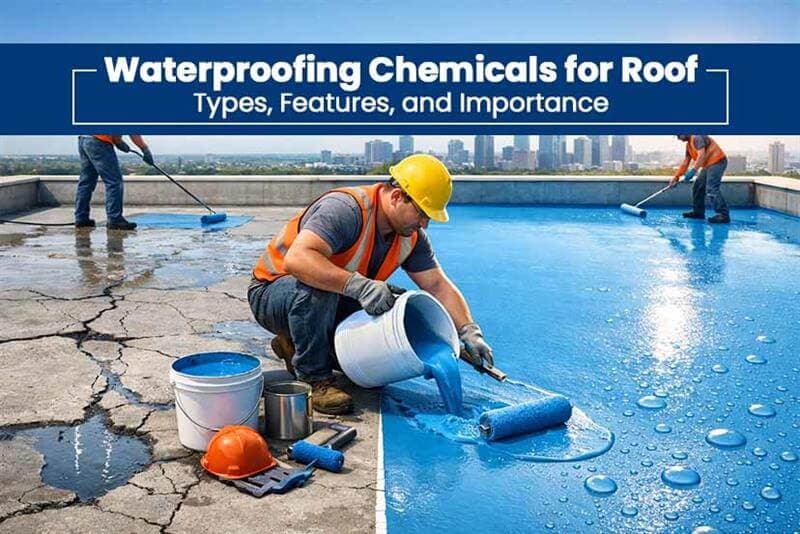
Waterproofing chemicals are specially formulated compounds applied to roof surfaces to create a protective barrier against water infiltration. These chemicals penetrate or coat the surface, sealing cracks, joints, and pores to prevent water from seeping through.
They are commonly used on concrete roofs, terraces, metal roofs, and flat slabs to enhance water resistance and extend the structure’s lifespan.
Types of Waterproofing Chemicals for Roof
1. Acrylic Waterproofing Coatings
Acrylic-based coatings are water-based and highly flexible. They form a seamless protective layer over the roof surface.
Best for: Residential terraces and small buildings
Advantages: UV-resistant, easy application, eco-friendly
2. Polyurethane Waterproofing Chemicals
Polyurethane coatings provide excellent elasticity and strong adhesion. They can withstand extreme weather conditions and structural movements.
Best for: Flat roofs and exposed areas
Advantages: High durability, crack-bridging ability, long lifespan
3. Bituminous Waterproofing Solutions
Bituminous coatings are derived from asphalt and are widely used for waterproofing.
Best for: Low-slope roofs and industrial buildings
Advantages: Cost-effective, strong water resistance, easy availability
4. Cementitious Waterproofing Chemicals
These are cement-based coatings mixed with special additives to improve water resistance.
Best for: Concrete roofs and internal areas
Advantages: Easy to apply, economical, compatible with concrete
5. Liquid Waterproofing Membrane
Liquid membranes are applied as a liquid and cure to form a rubber-like waterproof layer.
Best for: Complex roof shapes and joints
Advantages: Seamless finish, high flexibility, excellent coverage
6. Silicone Waterproofing Coatings
Silicone coatings offer superior water repellency and weather resistance.
Best for: Areas with heavy rainfall
Advantages: Long-lasting, resistant to ponding water, UV stable
Key Features of Roof Waterproofing Chemicals
1. Water Resistance
These chemicals create an impermeable layer that prevents water penetration even during heavy rainfall.
2. UV Protection
Many waterproofing coatings are UV-resistant, protecting roofs from sunlight damage and cracks.
3. Flexibility
They can expand and contract with temperature changes without cracking.
4. Crack Bridging Ability
High-quality waterproofing chemicals can fill and seal minor cracks effectively.
5. Durability
They enhance the lifespan of the roof by preventing moisture-related damage.
6. Easy Application
Most products are user-friendly and can be applied using brushes, rollers, or spray equipment.
Importance of Waterproofing Chemicals for the Roof
1. Prevents Water Leakage
Waterproofing chemicals stop water seepage, protecting interiors from damage such as stains, peeling paint, and mold growth.
2. Enhances Structural Strength
Continuous exposure to moisture weakens concrete and steel. Waterproofing prevents this deterioration.
3. Increases Roof Lifespan
By protecting against environmental factors, these chemicals extend the durability of the roof.
4. Reduces Maintenance Costs
Proper waterproofing minimizes repair and maintenance expenses over time.
5. Improves Indoor Comfort
Leak-proof roofs prevent humidity and dampness, ensuring a healthier indoor environment.
6. Protects Against Mold and Mildew
Moisture leads to fungal growth, which can affect health. Waterproofing eliminates this risk.
How to Choose the Right Waterproofing Chemical
When selecting waterproofing chemicals for your roof, consider the following:
- Type of roof surface (concrete, metal, tile)
- Weather conditions (rainfall, temperature variations)
- Budget and longevity requirements
- Ease of application and maintenance
- Compatibility with existing materials
Application Tips for Better Results
- Clean the roof surface thoroughly before application
- Repair cracks and joints beforehand
- Apply primer if required
- Follow the manufacturer’s instructions for mixing and curing
- Use multiple coats for enhanced protection
Conclusion
Waterproofing chemicals for roofs are essential for protecting buildings from water damage, enhancing durability, and ensuring long-term performance. With various types available, such as acrylic, polyurethane, bituminous, and cementitious, choosing the right solution depends on your specific needs and environmental conditions. Construction businesses looking to buy waterproofing chemicals in bulk can purchase them efficiently at the Moglix business.
Investing in high-quality waterproofing not only safeguards your property but also reduces maintenance costs and improves overall structural integrity. Whether for new construction or renovation, roof waterproofing is a smart and necessary step.