








Safety gloves are one of the most essential Personal Protective Equipment (PPE) used across industries to protect workers from cuts, chemicals, heat, electricity, abrasion, and other workplace hazards. Whether you work in manufacturing, construction, healthcare, food processing, welding, or laboratories, choosing the right type of safety gloves significantly reduces the risk of hand injuries.
According to workplace safety standards, hand injuries are among the most common occupational accidents. Wearing appropriate industrial safety gloves not only enhances worker safety but also improves productivity, grip, and comfort. If you are looking to buy safety gloves in bulk from reputed brands, you can simply procure them through the Moglix business.
In this guide, we’ll explore the different types of safety gloves, their importance, features, applications, and how to choose the best gloves for your workplace.
Why Are Safety Gloves Important?
Using proper safety gloves offers several advantages.
1. Prevents Hand Injuries
Protects hands from:
- Cuts
- Abrasions
- Burns
- Punctures
- Electric shocks
- Chemical exposure
2. Improves Workplace Safety
Safety gloves reduce workplace accidents and help organizations comply with occupational safety standards.
3. Enhances Grip
Many gloves feature textured coatings that improve grip, especially when handling oily, wet, or slippery objects.
4. Increases Productivity: Workers can confidently perform tasks involving sharp tools, machinery, chemicals, or extreme temperatures.
5. Ensures Regulatory Compliance
Many industries require PPE gloves to comply with standards such as:
- EN 388
- EN 374
- EN 407
- ASTM
- ANSI
- IS Standards
What are the different Types of Safety Gloves?
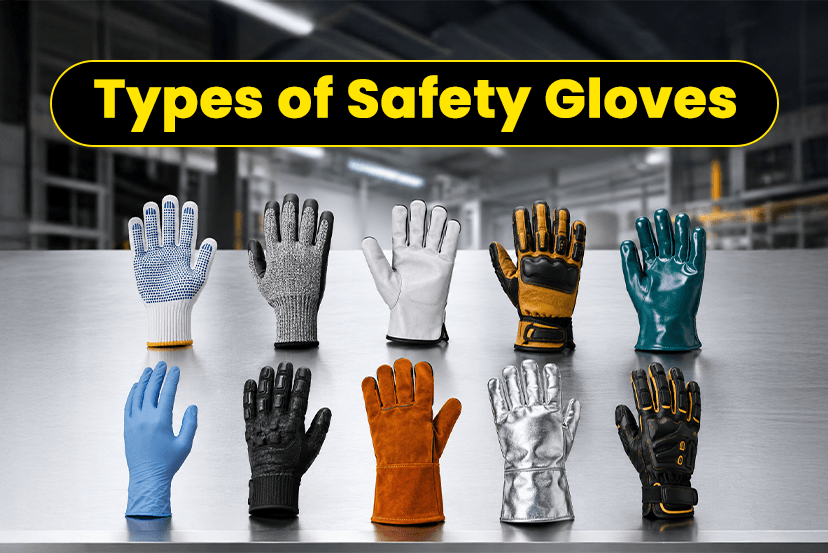
Below are the most commonly used safety gloves across various industries.
1. Cut-Resistant Gloves
Overview
Cut-resistant gloves are designed to protect hands from sharp objects such as blades, sheet metal, glass, and knives.
Materials
- Kevlar
- HPPE
- Dyneema
- Steel mesh
- Glass fiber blends
Key Features
- Excellent cut protection
- Flexible and lightweight
- High dexterity
- Abrasion resistant
- Comfortable for prolonged use
Common Applications
- Glass handling
- Automotive manufacturing
- Warehousing
- Construction
- Packaging
2. Nitrile Safety Gloves
Overview
Nitrile gloves are disposable or reusable gloves made from synthetic rubber.
They are among the most popular gloves because they resist oils, chemicals, and punctures.
Features
- Latex-free
- Chemical resistant
- Oil resistant
- Puncture resistant
- Excellent tactile sensitivity
Applications
- Laboratories
- Automotive workshops
- Food processing
- Pharmaceuticals
- Hospitals
- Chemical handling
3. Latex Gloves
Overview
Latex gloves offer excellent elasticity and comfort while providing protection against biological contaminants.
Features
- High flexibility
- Comfortable fit
- Good sensitivity
- Affordable
- Disposable
Applications
- Healthcare
- Medical examinations
- Cleaning
- Food handling
Note: Latex may cause allergies in some individuals.
4. PVC Safety Gloves
PVC gloves provide excellent resistance against oils, grease, acids, and chemicals.
Features
- Waterproof
- Chemical resistant
- Durable
- Good abrasion resistance
Applications
- Petrochemical industry
- Agriculture
- Chemical plants
- Cleaning operations
5. Leather Safety Gloves
Leather gloves are ideal for heavy-duty industrial work.
Features
- Heat resistant
- Durable
- Comfortable
- Excellent grip
- Long service life
Applications
- Welding
- Construction
- Mining
- Material handling
- Heavy engineering
6. Welding Gloves
These gloves are specially designed for welding operations involving sparks and molten metal.
Features
- Flame resistant
- Heat resistant
- Reinforced stitching
- Long cuffs
- High durability
Applications
- Fabrication shops
7. Heat-Resistant Gloves
Heat-resistant gloves protect workers handling hot equipment or working in high-temperature environments.
Features
- Thermal insulation
- Flame resistant
- Comfortable inner lining
- High temperature protection
Applications
- Foundries
- Steel plants
- Glass manufacturing
- Kitchens
- Bakeries
8. Cold-Resistant Gloves
Designed to protect workers in freezing environments.
Features
- Thermal insulation
- Waterproof options
- Flexible at low temperatures
- Comfortable lining
Applications
- Cold storage
- Refrigeration
- Frozen food industry
- Outdoor construction
9. Chemical-Resistant Gloves
These gloves protect against hazardous chemicals, solvents, acids, and alkalis.
Common Materials
- Neoprene
- Nitrile
- Butyl
- Viton
- PVC
Features
- Chemical protection
- Waterproof
- Durable
- Long-lasting
Applications
- Chemical plants
- Laboratories
- Pharmaceutical industries
- Cleaning services
10. Electrical Insulating Gloves
Electrical gloves protect workers from electric shock during maintenance and repair work.
Features
- High voltage insulation
- Flexible
- Certified safety standards
- Rubber construction
Applications
- Electrical maintenance
- Utility companies
- Power plants
- Electrical installations
11. Anti-Vibration Gloves
Designed to reduce vibration transferred from power tools to workers’ hands.
Features
- Shock absorption
- Comfortable padding
- Improved grip
- Reduced fatigue
Applications
- Jackhammer operators
- Construction
- Mining
- Mechanical workshops
12. Cotton Safety Gloves
Simple and lightweight gloves used for low-risk tasks.
Features
- Breathable
- Comfortable
- Washable
- Economical
Applications
- Warehousing
- Assembly lines
- Inspection work
Comparison of Different Types of Safety Gloves
| Type | Protection Against | Best For |
| Cut-Resistant Gloves | Sharp objects | Manufacturing |
| Nitrile Gloves | Oils, chemicals | Medical, Automotive |
| Latex Gloves | Biological hazards | Healthcare |
| PVC Gloves | Chemicals | Chemical Industry |
| Leather Gloves | Heat, abrasion | Construction |
| Welding Gloves | Sparks, molten metal | Welding |
| Heat-Resistant Gloves | High temperatures | Steel Plants |
| Cold-Resistant Gloves | Freezing temperatures | Cold Storage |
| Chemical Resistant Gloves | Acids, solvents | Laboratories |
| Electrical Gloves | Electric shock | Electrical Work |
| Anti-Vibration Gloves | Tool vibration | Construction |
| Cotton Gloves | Dust, light handling | Packaging |
Key Features to Look for in Safety Gloves
Before purchasing industrial safety gloves, consider the following features:
- Material Quality: Choose gloves made from high-quality materials suitable for your application.
- Grip: Textured palms improve the handling of slippery tools and materials.
- Dexterity: Workers performing precision tasks require gloves with high finger flexibility.
- Comfort: Proper fit reduces fatigue during extended use.
- Durability: Reusable gloves should withstand wear and tear without compromising safety.
- Chemical Compatibility: Ensure gloves are compatible with the chemicals being handled.
- Temperature Resistance: Select gloves rated for hot or cold environments as required.
- Certification: Look for compliance with relevant safety standards such as EN 388, EN 374, EN 407, ANSI, ASTM, or applicable national standards.
How to Choose the Right Safety Gloves?
Selecting the correct gloves depends on the specific workplace hazards.
Step 1: Identify the Hazard
- Cuts
- Heat
- Chemicals
- Electricity
- Abrasion
- Cold
- Vibrations
Step 2: Choose the Right Material
Different glove materials offer different levels of protection.
Step 3: Check Safety Ratings
Verify compliance with recognized PPE standards.
Step 4: Ensure Proper Fit
Ill-fitting gloves can reduce grip, comfort, and safety.
Step 5: Consider Task Requirements
Choose gloves that balance protection with dexterity for the job at hand.
Best Practices for Using Safety Gloves
To maximize protection:
- Inspect gloves before every use.
- Replace damaged or worn-out gloves immediately.
- Store gloves in a clean, dry environment.
- Use gloves only for their intended purpose.
- Clean reusable gloves according to the manufacturer’s instructions.
- Avoid using contaminated gloves across different tasks.
- Train employees on the correct selection and use of PPE.
Conclusion
Safety gloves are a vital component of workplace personal protective equipment, helping protect workers from a wide range of hazards, including cuts, chemicals, heat, electricity, and mechanical injuries. With various glove materials and designs available, selecting the right type depends on the nature of the job, the hazards involved, and the required level of protection. If you are looking to buy safety gloves in bulk, then you can partner with Moglix Business and procure quality products
By understanding the types of safety gloves, their importance, features, and use cases, employers can improve workplace safety, ensure regulatory compliance, and enhance employee productivity. Investing in high-quality protective gloves and using them correctly is a simple yet effective step toward creating a safer work environment.
Frequently Asked Questions (FAQs)
Which safety gloves are best for construction work?
Leather gloves, cut-resistant gloves, and anti-vibration gloves are commonly used in construction, depending on the specific task.
Are nitrile gloves better than latex gloves?
Nitrile gloves generally offer better puncture and chemical resistance and are latex-free, making them suitable for users with latex allergies.
Which gloves protect against electrical shock?
Electrical insulating rubber gloves that are tested and certified for the appropriate voltage class should be used for electrical work.
Can chemical-resistant gloves be reused?
Some chemical-resistant gloves are reusable if cleaned, inspected, and maintained according to the manufacturer’s recommendations. Disposable chemical gloves should not be reused.
How often should safety gloves be replaced?
Replace gloves immediately if they show signs of damage, punctures, excessive wear, contamination, or reduced protective performance.