









Electricity powers almost every aspect of modern living, from household appliances to industrial machinery. However, monitoring power consumption is equally important to ensure efficiency, reduce electricity bills, and maintain safety. This is where a wattmeter becomes extremely useful. A wattmeter is an electrical measuring instrument used to calculate the power consumed by an appliance or electrical circuit in watts. Businesses and industries looking to buy measuring equipment at the most reasonable prices, you can easily partner with Moglix Business.
Whether in homes, offices, factories, or laboratories, wattmeters help users understand energy consumption patterns and improve energy management. With rising electricity costs and increasing awareness about energy conservation, wattmeters have become an essential tool in daily life.
In this article, we will explore the top 10 use cases of a wattmeter in daily life, along with their importance and benefits.
What Is a Wattmeter?
A wattmeter is a device used to measure electrical power in a circuit. It measures the rate at which electrical energy is consumed or generated. The reading is generally displayed in watts (W), kilowatts (kW), or megawatts (MW).
Wattmeters are commonly used in:
- Homes
- Offices
- Factories
- Power plants
- Laboratories
- Commercial buildings
Modern digital wattmeters provide highly accurate readings and often come with advanced features like voltage monitoring, current measurement, power factor calculation, and energy tracking.
Importance of Wattmeters in Daily Life
The use of wattmeters is increasing because they help in:
- Monitoring electricity usage
- Reducing energy wastage
- Improving appliance efficiency
- Lowering electricity bills
- Detecting faulty devices
- Supporting sustainable energy practices
With smart homes and energy-efficient systems becoming more popular, wattmeters are now considered an important electrical measuring instrument.
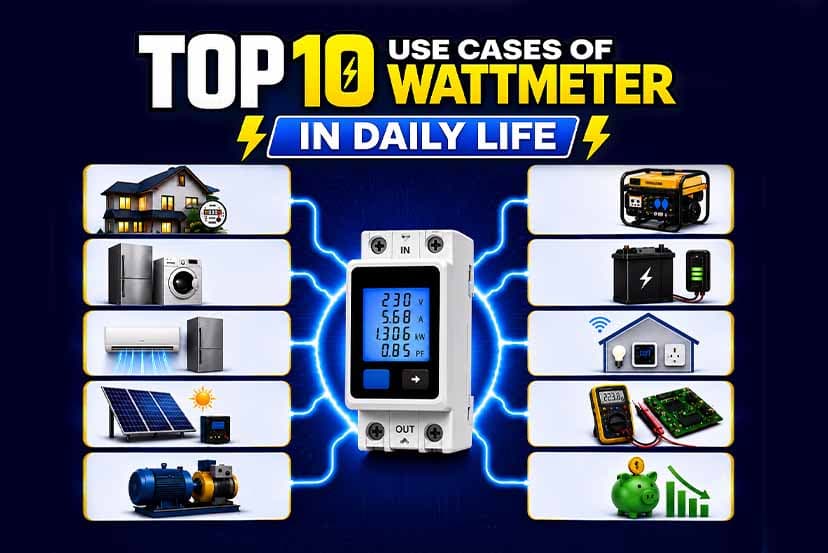
Top 10 Use Cases Of Wattmeter In Daily Life
1. Monitoring Household Electricity Consumption
One of the most common use cases of a wattmeter is measuring household power consumption. Homeowners use wattmeters to track how much electricity appliances like refrigerators, air conditioners, washing machines, and televisions consume.
By identifying high-energy-consuming devices, users can take steps to reduce unnecessary electricity usage and lower utility bills.
Benefits:
- Better energy management
- Reduced electricity costs
- Improved awareness of power usage
2. Measuring Power Consumption of Home Appliances
A wattmeter helps determine the exact power rating of appliances. Many people use portable digital wattmeters to check whether devices are consuming more power than expected.
For example:
- Microwave ovens
- Water heaters
- Electric irons
- Room heaters
- Fans and coolers
This helps users choose energy-efficient appliances and maintain optimal performance.
3. Reducing Electricity Bills
Electricity bills are increasing due to excessive power usage. Wattmeters help consumers identify which appliances consume the most electricity and when peak usage occurs.
After monitoring the readings, users can:
- Switch to energy-saving appliances
- Avoid standby power losses
- Use appliances during non-peak hours
This practical application makes wattmeters highly useful in daily life.
4. Detecting Faulty Electrical Equipment
Faulty electrical appliances often consume abnormal amounts of electricity. A wattmeter can help identify such issues quickly.
For example:
- A malfunctioning refrigerator compressor
- Damaged air conditioner components
- Faulty motor winding
- Inefficient power adapters
When a device shows unusual power consumption, it may indicate that maintenance or repair is required.
Advantages:
- Prevents electrical hazards
- Enhances appliance lifespan
- Saves repair costs
5. Use in Solar Power Systems
Solar energy systems rely heavily on wattmeters to monitor power generation and consumption. Wattmeters help users understand:
- Solar panel output
- Battery charging performance
- Inverter efficiency
- Household power usage
This ensures the solar system operates efficiently and delivers maximum energy savings.
In modern renewable energy systems, digital wattmeters are considered essential monitoring tools.
6. Managing Office and Commercial Energy Usage
Offices and commercial buildings use multiple electrical devices simultaneously, such as:
- Computers
- Printers
- Lighting systems
- Air conditioning units
- Networking equipment
A wattmeter helps facility managers monitor electricity usage and identify opportunities for energy optimization.
Benefits for Commercial Spaces:
- Lower operational costs
- Efficient energy planning
- Reduced carbon footprint
7. Testing Electronic Devices and Gadgets
Technicians and electronics enthusiasts use wattmeters for testing electronic devices. It helps evaluate:
- Power efficiency
- Battery charging performance
- Device stability
- Energy consumption
Common gadgets tested include:
- Mobile chargers
- Laptops
- Gaming consoles
- Smart TVs
- Power banks
This application is especially useful for electronic repair centers and research labs.
8. Industrial Machinery Monitoring
Industries use wattmeters to monitor the power consumption of heavy machinery and motors. Accurate power measurement ensures machines operate efficiently without overloading.
Applications include:
- Manufacturing units
- CNC machines
- Compressors
- Conveyor systems
- Industrial pumps
Industrial wattmeters help reduce energy waste and improve operational efficiency.
9. Educational and Laboratory Applications
Wattmeters are widely used in schools, colleges, and technical laboratories for educational purposes. Engineering students use them to understand electrical principles such as:
- Power calculation
- Voltage and current relationships
- AC/DC circuit analysis
- Power factor measurement
Practical learning with wattmeters improves technical understanding and hands-on experience.
10. Smart Home Energy Management
Modern smart homes integrate wattmeters with IoT-based energy management systems. Smart wattmeters provide real-time monitoring through mobile applications.
Users can:
- Track energy usage remotely
- Set power consumption alerts
- Automate energy-saving functions
- Monitor appliance efficiency
This technology supports sustainable living and efficient power utilization.
What are the different Types of Wattmeters?
Different applications require different types of wattmeters. Some common types include:
Analog Wattmeter
A traditional wattmeter with a needle display is used in basic electrical applications.
Digital Wattmeter
Provides highly accurate digital readings and advanced monitoring features.
Portable Wattmeter
Compact and easy-to-use wattmeter designed for household appliances.
Smart Wattmeter
Connected to IoT systems for real-time remote energy monitoring.
Industrial Wattmeter
A heavy-duty wattmeter is used for large-scale industrial power measurement.
Benefits of Using a Wattmeter
Using a wattmeter offers several advantages:
- Helps save electricity
- Reduces utility expenses
- Improves appliance performance
- Prevents overloading
- Supports energy conservation
- Identifies faulty equipment
- Enhances electrical safety
- Enables efficient energy management
How to Choose the Right Wattmeter
When selecting a wattmeter, consider the following factors:
- Accuracy: Choose a wattmeter with precise measurement capability.
- Display Type: Digital displays are easier to read and more accurate.
- Measurement Range: Ensure the wattmeter supports the required voltage and current range.
- Portability: Portable wattmeters are ideal for household use.
- Smart Features: Advanced models offer Wi-Fi connectivity and mobile app integration.
Future of Wattmeters
The future of wattmeters is closely connected with smart energy management and renewable energy systems. With increasing adoption of smart homes and energy-efficient devices, digital and IoT-enabled wattmeters are becoming more advanced.
Future wattmeters may include:
- AI-based energy analysis
- Real-time cloud monitoring
- Predictive maintenance alerts
- Automated energy-saving recommendations
These innovations will further improve electricity management and sustainability.
Conclusion
A wattmeter is no longer just a technical instrument used by electricians and engineers. It has become an essential device for homes, offices, industries, and smart energy systems. From reducing electricity bills to monitoring solar power systems and improving appliance efficiency, the practical applications of wattmeters are vast and highly beneficial. So if you are looking to procure measuring tools and equipment can easily collaborate with Moglix Businesses.
Understanding the top 10 use cases of a wattmeter in daily life helps users make informed decisions about energy consumption and electrical safety. As technology continues to evolve, wattmeters will play an even greater role in efficient power management and sustainable living.