








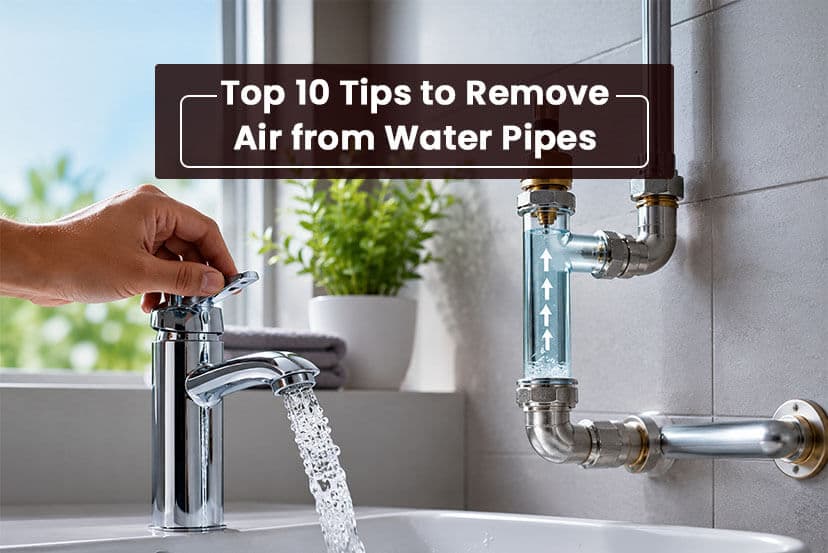
Air trapped inside water pipes is one of the most common plumbing problems in homes, apartments, commercial buildings, and industrial facilities. If you’ve noticed sputtering faucets, irregular water pressure, strange banging noises, or inconsistent water flow, chances are there is air in your plumbing system.
Although a small amount of air may seem harmless, prolonged air pockets can reduce the efficiency of your plumbing system, create pressure fluctuations, and even damage pumps and valves over time. In this comprehensive guide, we’ll explain why air gets trapped in water pipes, the symptoms, and the top 10 effective tips to remove air from water pipes safely and permanently.
Why Does Air Get Trapped in Water Pipes?
Several factors can introduce air into your plumbing system.
Common causes include:
- Water supply interruption
- New plumbing installation
- Pipe repairs or replacements
- Water pump maintenance
- Municipal water line servicing
- Empty overhead water tanks
- Leaking joints allow air entry
- Faulty pressure valves
- Improper pipe slopes
- Water hammer issues
Signs of Air in Water Pipes
Before fixing the issue, identify whether your plumbing system has trapped air.
Common symptoms include:
- Faucets sputter before water flows
- Water pressure suddenly drops
- Uneven water flow
- Gurgling sounds inside pipes
- Banging or knocking noises (water hammer)
- Air bubbles coming from taps
- The pump frequently loses prime
- Vibrating pipelines
How to Remove Air from Water Pipes: Top 10 Tips
1. Open Every Water Faucet
The easiest and most effective way to remove trapped air is by opening all faucets.
Steps:
- Turn off all water-using appliances.
- Start with the faucet on the lowest floor.
- Open every cold water tap.
- Then open every hot water tap.
- Allow water to flow continuously for 10–15 minutes.
- Close the taps after the water runs smoothly.
This process pushes trapped air out through the fixtures.
Best for: Homes, Apartments, Offices, etc.
2. Flush the Entire Plumbing System
A complete system flush helps remove stubborn air pockets.
How to do it
- Shut off the main water valve.
- Open all taps to drain the pipes.
- Wait until all the water has emptied.
- Turn the main supply back on slowly.
- Keep faucets open until a steady water flow returns.
Flushing refreshes the plumbing system and eliminates trapped air.
3. Start with the Lowest Faucet
Always begin bleeding air from the lowest point of your plumbing.
Why? Gravity helps force trapped air upward toward higher outlets.
Recommended sequence:
- Basement tap
- Ground floor
- First floor
- Upper floors
- Terrace connections
This method ensures maximum air removal.
4. Bleed Air from Outdoor Hose Bibs
Outdoor taps often become effective air release points.
Connect a garden hose and let water run for several minutes.
Benefits include:
- Faster air removal
- Better system flushing
- Reduced pipe vibration
This works especially well after municipal water supply interruptions.
5. Check the Water Pressure
Low water pressure often prevents trapped air from escaping.
Ideal household water pressure:
- 40–60 PSI (2.7–4.1 bar)
If pressure is too low:
- Inspect the pressure regulator.
- Verify municipal water supply.
- Check booster pumps.
- Ensure overhead tanks are adequately filled.
Proper pressure helps purge air naturally.
6. Inspect for Plumbing Leaks
Tiny leaks can continuously introduce air into your plumbing.
Inspect:
- Pipe joints
- Valves
- Pump connections
- Flexible hoses
- Water meter fittings
Repairing leaks prevents recurring airlock problems.
7. Prime the Water Pump
For homes using borewell or booster pumps, loss of pump prime often causes air entry.
Steps:
- Turn off the pump.
- Fill the pump casing with water.
- Remove trapped air.
- Restart the pump.
- Observe water flow.
A properly primed pump maintains consistent pressure.
8. Install Automatic Air Release Valves
Automatic air release valves remove trapped air without manual intervention.
Advantages:
- Continuous air removal
- Reduced maintenance
- Improved pump efficiency
- Lower noise levels
- Better pipeline performance
These valves are commonly used in:
- Commercial buildings
- Industrial pipelines
- Irrigation systems
- High-rise apartments
9. Inspect Water Heater Connections
Sometimes the air originates from the hot water system.
Check:
- Water heater inlet
- Expansion tank
- Pressure relief valve
- Hot water lines
Run only the hot water taps for several minutes. If sputtering disappears, the issue may be isolated to the water heater.
10. Call a Professional Plumber for Persistent Airlocks
If the problem keeps returning despite repeated bleeding, professional inspection is recommended.
Possible hidden causes include:
- Underground pipe leaks
- Damaged pressure-reducing valves
- Faulty check valves
- Air entering through the pump suction
- Improper pipeline design
- Hidden pipe damage
A licensed plumber can perform pressure testing and identify the root cause.
Common Mistakes to Avoid
Avoid these errors while removing air from water pipes:
- Opening only one faucet
- Turning the water pressure on too quickly
- Ignoring plumbing leaks
- Running pumps without priming
- Closing taps too early
- Overlooking the water heater
- Neglecting routine maintenance
These mistakes can leave air trapped inside the system or lead to recurring problems.
Benefits of Removing Air from Water Pipes
Removing trapped air provides several advantages:
- Restores consistent water pressure
- Eliminates sputtering faucets
- Reduces pipe noise and vibration
- Prevents water hammer
- Improves pump efficiency
- Protects plumbing fixtures
- Extends the lifespan of pipes and valves
- Enhances overall plumbing performance
Final Thoughts
Air trapped in water pipes is a common issue, but it is usually easy to resolve with the right approach. By opening all faucets, flushing the plumbing system, checking water pressure, inspecting for leaks, and maintaining pumps and valves, you can restore smooth, consistent water flow and prevent recurring airlocks. Regular maintenance and timely inspections not only improve plumbing performance but also help extend the life of your entire water supply system, ensuring reliable operation for years to come. If you are looking to buy top-quality pipes in bulk at the most reasonable prices for infrastructure projects, construction work, and residential projects, Business Moglix helps you in procuring them effortlessly.
Also read: https://business.moglix.com/blogs/top-10-cpvc-pipe-companies-in-india-comparison-and-latest-rank
Frequently Asked Questions (FAQs)
1. What causes air to get trapped in water pipes?
Air usually enters the plumbing system after water supply interruptions, plumbing repairs, new installations, pump maintenance, or through leaking pipe joints.
2. Can trapped air damage plumbing?
Yes. Persistent air pockets can cause water hammer, pressure fluctuations, increased pump wear, noisy pipes, and reduced plumbing efficiency.
3. How long does it take to remove air from water pipes?
In most residential systems, running all faucets for 10–20 minutes is enough to remove trapped air. Larger or more complex systems may require additional flushing or professional assistance.
4. Why is my faucet sputtering?
A sputtering faucet is one of the clearest signs of trapped air in the water line. The issue often resolves after bleeding the plumbing system.
5. Can low water pressure cause air in pipes?
Low pressure does not directly create air, but it can make it harder for trapped air to escape, allowing air pockets to persist longer in the plumbing system.