








Safety helmets are one of the most essential pieces of Personal Protective Equipment (PPE) used across construction sites, factories, warehouses, mining operations, and industrial facilities. Beyond protecting workers from head injuries caused by falling objects, impacts, or electrical hazards, helmet colours play a crucial role in workplace organization.
Although India does not have a mandatory national safety helmet colour code, most organizations follow widely accepted industry practices while complying with BIS IS 2925 standards for helmet performance. In this guide, we’ll explain the meaning of each helmet colour, the commonly followed colour code in India, and the key guidelines every employer and worker should know in 2026.
What is a Safety Helmet Colour Code?
A safety helmet colour code is a system that assigns different helmet colours to employees based on their job roles. It enables quick identification of workers, supervisors, engineers, safety officers, and visitors on construction sites and industrial workplaces.
Is Helmet Colour Coding Mandatory in India?
As of 2026, there is no legally prescribed helmet colour code in India. However, organizations commonly follow industry-standard colour practices and define their own helmet colour policies while complying with BIS IS 2925 safety standards.
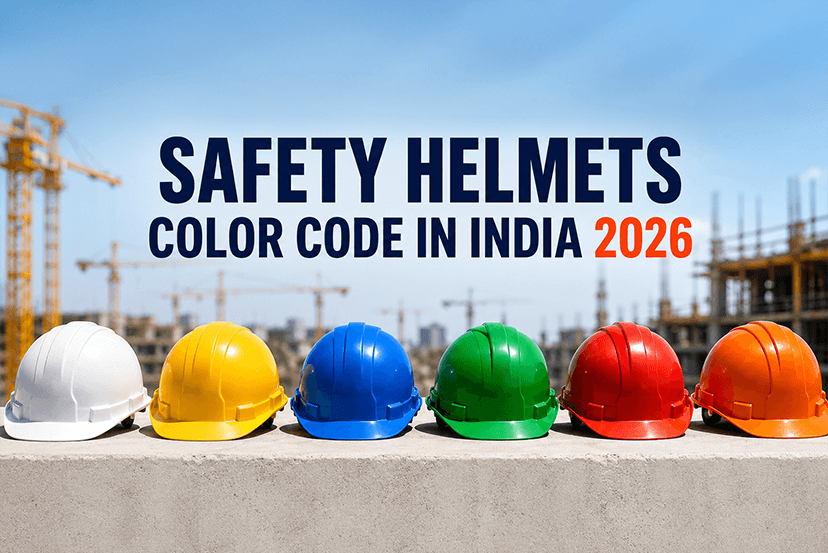
Safety Helmet Colour Code Chart (India 2026)
| Helmet Colour | Common Users | Purpose |
| White | Engineers, Managers, Supervisors | Site supervision and project management |
| Yellow | Construction Workers, Labourers | General site work |
| Blue | Electricians, Technicians, Carpenters | Skilled technical work |
| Green | Safety Officers, HSE Team | Safety monitoring and emergency response |
| Red | Firefighters, Emergency Personnel | Fire safety and emergency services |
| Orange | Traffic Marshals, Signalmen | High-visibility operations |
| Brown | Welders, Heat-related Work | Specialized industrial tasks |
| Grey | Trainees, Apprentices | Training and temporary staff |
| Pink | Visitors or Spare Helmets | Temporary replacement helmets |
Note: Helmet colour assignments may vary depending on company or project-specific safety policies.
Understand the Helmet Colour Meanings
- White Helmet: Typically worn by engineers, project managers, architects, and supervisors responsible for planning, inspections, and site management.
- Yellow Helmet: Used by general construction workers, labourers, and machine operators performing day-to-day operational tasks.
- Blue Helmet: Assigned to skilled workers, including electricians, plumbers, technicians, and maintenance personnel.
- Green Helmet: Reserved for safety officers, HSE engineers, and first-aid responders responsible for workplace safety compliance.
- Red Helmet: Generally worn by emergency response teams and fire safety personnel.
- Orange Helmet: Used by traffic controllers, lifting supervisors, and workers requiring high visibility in hazardous zones.
- Brown Helmet: Often assigned to welders or workers involved in high-temperature operations, depending on company policy.
- Grey Helmet: Commonly used for trainees, apprentices, or temporary workers.
- Pink Helmet: Usually kept as a spare helmet for visitors or employees who forget their assigned helmets.
Why Helmet Colour Codes Matter
- Enables quick worker identification
- Improves emergency response
- Enhances workplace communication
- Supports visitor management
- Promotes better safety compliance
Safety Helmet Guidelines
- Use BIS IS 2925-certified industrial safety helmets.
- Wear the helmet correctly with the chin strap securely fastened.
- Inspect helmets regularly for cracks, dents, or other signs of damage.
- Replace helmets after a major impact or at the manufacturer’s recommended interval.
- Follow your company’s approved helmet colour code, as colour assignments may differ between organizations.
- Store helmets away from direct sunlight, chemicals, and excessive heat to maintain their protective performance.
Why Helmet Colour Codes Matter
| Benefit | Importance |
| Quick Identification | Helps identify workers and supervisors instantly. |
| Better Safety | Improves emergency response and hazard management. |
| Efficient Communication | Makes it easier to locate the right personnel on-site. |
| Visitor Management | Clearly distinguishes visitors from authorized workers. |
| Regulatory Compliance | Supports organized PPE management and workplace safety programs. |
Conclusion
Safety helmet colour codes play a vital role in improving workplace safety, communication, and operational efficiency. While India does not mandate a standard helmet colour code, following widely accepted industry practices and using BIS-certified helmets helps create a safer and more organized work environment. Employers should clearly communicate their colour-coding policy to ensure consistency and compliance across all job sites. If you are looking to buy safety helmets in bulk at the most reasonable prices, then Moglix Business is the one stop destiniation to procure effortlessly.