








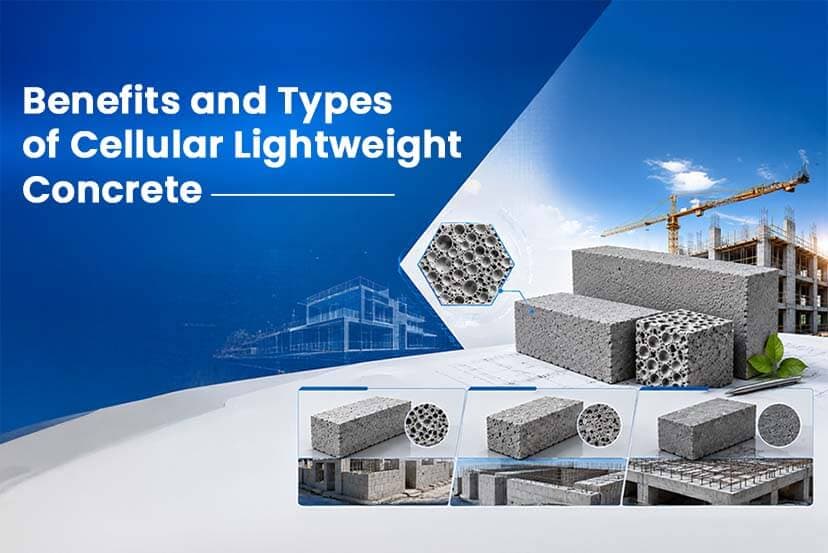
The construction industry is constantly evolving to meet the demands of sustainability, cost efficiency, and faster project completion. One innovative material that has gained significant popularity in recent years is Cellular Lightweight Concrete (CLC). Known for its lightweight properties, thermal insulation, and versatility, CLC is increasingly being used in residential, commercial, and industrial construction projects.
Businesses and industries requiring bulk procurement and looking to buy cement in bulk at the most reasonable prices, then Moglix Business is the right platform to procure effortlessly. Through this blog, understanding the benefits and types of Cellular Lightweight Concrete can help you make informed decisions for your next construction project.
What Is Cellular Lightweight Concrete (CLC)?
Cellular Lightweight Concrete (CLC) is a cement-based material that contains millions of uniformly distributed air bubbles created using a foaming agent. These air voids significantly reduce the density of the concrete while maintaining adequate strength for various construction applications.
Unlike conventional concrete, CLC is lightweight, easy to handle, and offers excellent insulation properties. It is produced by mixing cement, water, sand (optional), and a pre-formed foam generated through specialized equipment. The density of CLC generally ranges from 300 kg/m³ to 1800 kg/m³, depending on the intended application.
How Is CLC Concrete Made?
The manufacturing process of Cellular Lightweight Concrete involves the following steps:
- Preparation of cement slurry using cement, water, and sand.
- Generation of stable foam using a foaming agent.
- Mixing the foam with the slurry to create air-filled concrete.
- Pouring the mixture into molds or directly into construction areas.
- Curing the concrete for strength development.
The trapped air bubbles create a lightweight structure while maintaining sufficient durability and workability.
What are the Types of Cellular Lightweight Concrete?
CLC is classified primarily based on its density and intended applications.
1. Low-Density CLC (300–800 kg/m³)
This type of CLC contains a high volume of air voids and is mainly used where structural strength is not the primary requirement.
Applications:
- Roof insulation
- Void filling
- Thermal insulation layers
- Trench filling
- Soundproofing systems
Benefits:
- Extremely lightweight
- Excellent thermal insulation
- Reduced dead load on structures
2. Medium-Density CLC (800–1200 kg/m³)
Medium-density CLC provides a balance between strength and insulation properties.
Applications:
- Non-load-bearing walls
- Partition blocks
- Wall panels
- Building infill applications
Benefits:
- Good compressive strength
- Improved fire resistance
- Better sound insulation
3. High-Density CLC (1200–1800 kg/m³)
High-density CLC offers greater strength and durability while remaining lighter than conventional concrete.
Applications:
- Load-bearing walls
- Structural elements
- Floor screeds
- Precast components
Benefits:
- Enhanced structural performance
- Reduced overall building weight
- Easier handling and transportation
Benefits of Cellular Lightweight Concrete
CLC offers numerous advantages over traditional concrete and masonry materials.
1. Lightweight Construction Material
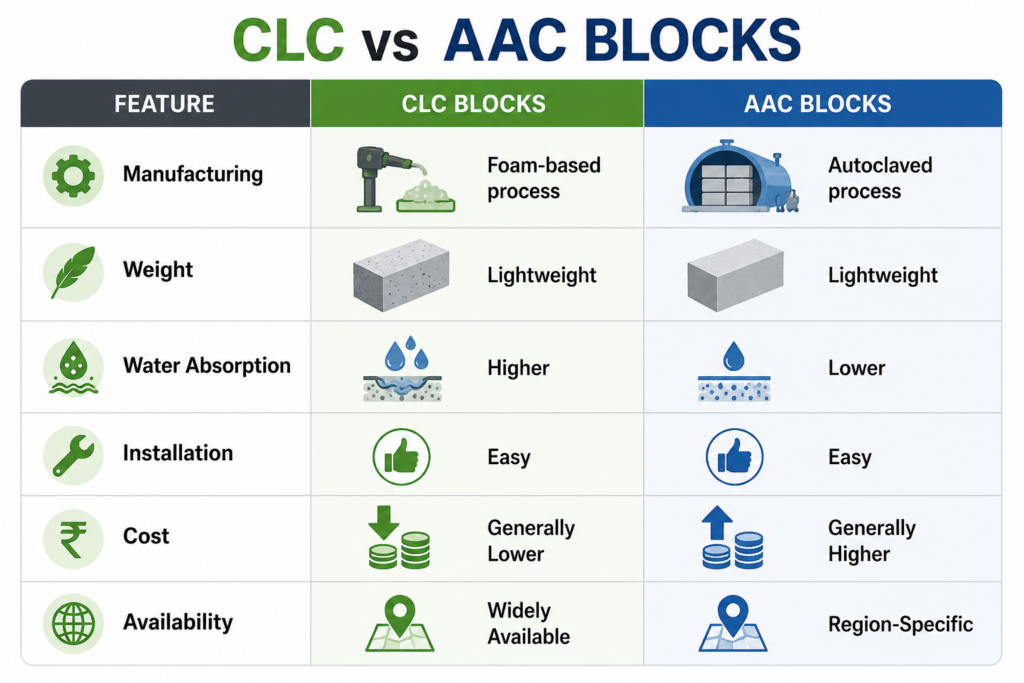
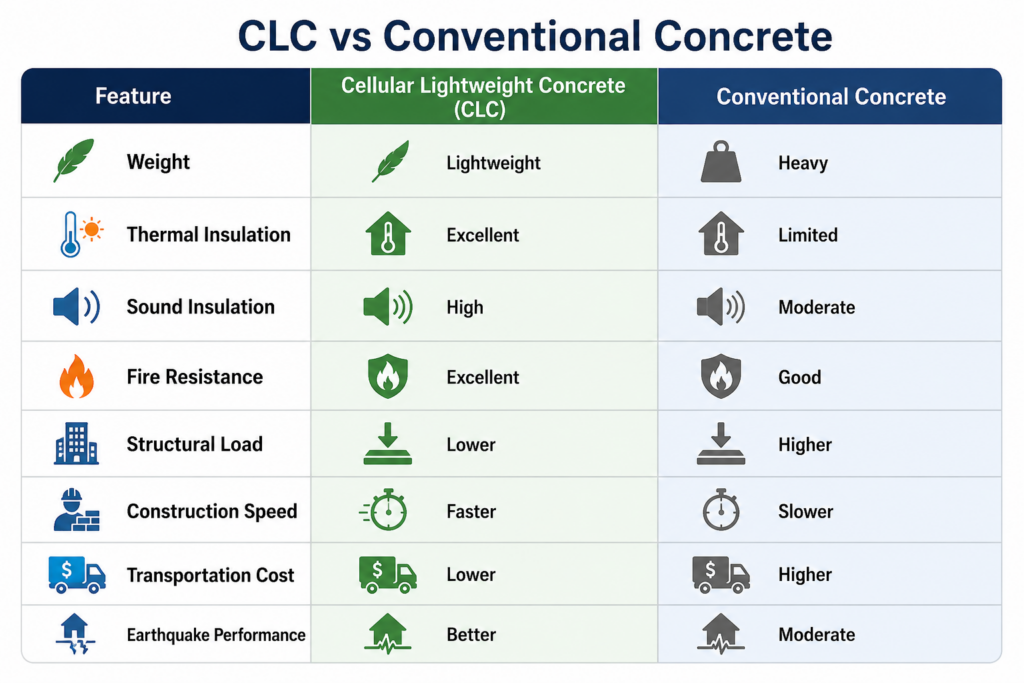
The most significant advantage of CLC is its low density. It can weigh up to 80% less than conventional concrete, reducing structural loads and foundation requirements.
Impact:
- Lower dead load
- Reduced steel consumption
- Cost savings in structural design
2. Excellent Thermal Insulation
The air bubbles trapped within CLC act as natural insulators, reducing heat transfer through walls and roofs.
Benefits:
- Lower indoor temperatures
- Reduced energy consumption
- Improved comfort in buildings
This makes CLC particularly suitable for regions with extreme temperatures.
3. Superior Sound Insulation
CLC effectively absorbs sound due to its porous structure.
Suitable For:
- Residential apartments
- Schools
- Hospitals
- Commercial complexes
- Recording studios
Its soundproofing capability improves indoor comfort and privacy.
4. Fire Resistance
Cellular Lightweight Concrete exhibits excellent fire-resistant properties.
Advantages:
- Non-combustible material
- Slows fire spread
- Protects structural elements during fire incidents
Many CLC blocks can withstand several hours of fire exposure without significant damage.
5. Environmentally Friendly
CLC is considered a sustainable construction material.
Eco-Friendly Features:
- Reduced raw material consumption
- Lower transportation emissions
- Minimal construction waste
- Potential use of industrial by-products
Its lightweight nature contributes to a lower overall carbon footprint.
6. Easy Workability
CLC can be easily cut, drilled, shaped, and installed using standard construction tools.
Benefits:
- Faster construction
- Simplified installation
- Reduced labor requirements
This flexibility makes it ideal for customized construction projects.
7. Reduced Structural Load
Because of its lower weight, CLC decreases the load imposed on foundations, columns, and beams.
Result:
- Smaller foundation requirements
- Lower reinforcement costs
- Increased design flexibility
This benefit is especially valuable in high-rise buildings.
8. Cost-Effective Construction
Although the initial production process may require specialized equipment, CLC often reduces overall project costs.
Cost Savings Come From:
- Lower transportation expenses
- Reduced labor costs
- Faster construction timelines
- Smaller structural components
These factors contribute to improved project economics.
9. Improved Earthquake Resistance
Lighter buildings experience lower seismic forces during earthquakes.
Benefits:
- Reduced structural stress
- Enhanced building safety
- Better seismic performance
CLC is therefore suitable for construction in earthquake-prone regions.
10. Moisture and Pest Resistance
Properly manufactured CLC offers resistance against moisture penetration, termites, and other pests.
Advantages:
- Increased durability
- Lower maintenance requirements
- Longer service life
Applications of Cellular Lightweight Concrete
CLC is widely used across various construction sectors.
Residential Construction
- Houses
- Apartments
- Villas
- Boundary walls
Commercial Buildings
- Office complexes
- Shopping malls
- Hotels
- Educational institutions
Industrial Projects
- Warehouses
- Factories
- Industrial flooring
Infrastructure Projects
- Road embankments
- Bridge approaches
- Utility trench filling
Precast Construction
- Wall panels
- Blocks
- Partition systems
Understand the Challenges of CLC Concrete
Despite its numerous advantages, CLC has some limitations.
Lower Strength at Low Densities: Very lightweight CLC may not be suitable for structural applications.
Specialized Production Equipment: Foam generators and mixing equipment are required.
Proper Quality Control Needed: Uniform foam distribution is essential to achieve consistent performance.
Curing Requirements: CLC requires proper curing to attain optimal strength and durability.
Best Practices for Using CLC
To maximize the performance of Cellular Lightweight Concrete:
- Use high-quality foaming agents.
- Maintain proper mix proportions.
- Ensure uniform foam distribution.
- Follow recommended curing procedures.
- Select density based on application requirements.
- Conduct regular quality testing.
These practices help achieve reliable and durable construction outcomes.
Conclusion
Cellular Lightweight Concrete (CLC) has emerged as a versatile and sustainable alternative to conventional concrete. Its lightweight nature, excellent thermal and acoustic insulation, fire resistance, and cost-saving advantages make it an ideal choice for modern construction.
From roof insulation and partition walls to structural applications and infrastructure projects, the various types of CLC cater to diverse construction needs. By understanding the benefits and selecting the appropriate density for specific applications, builders and contractors can enhance efficiency, reduce costs, and contribute to more sustainable building practices.