








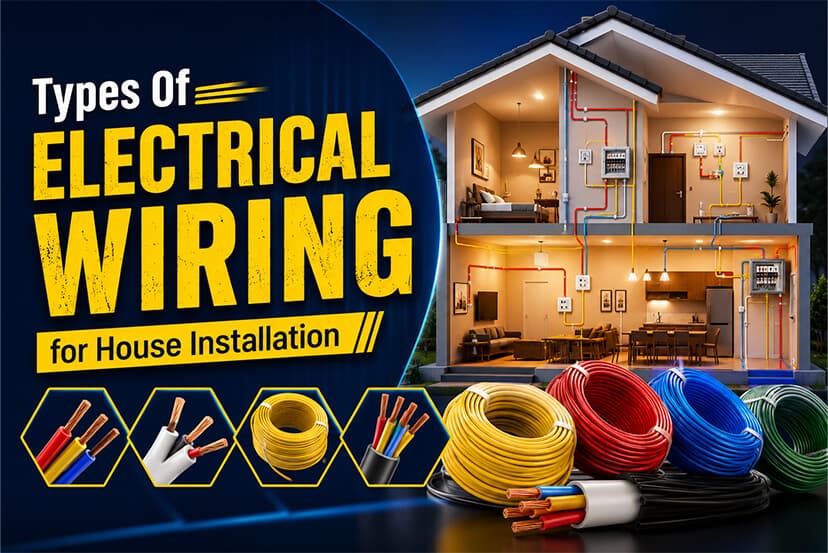
Electrical wiring is the backbone of every residential building. Whether you are constructing a new house, renovating an apartment, or upgrading an old electrical system, selecting the right type of wiring ensures safety, efficiency, and long-term reliability. Modern electrical wiring has evolved significantly in 2026 with improved insulation materials, higher fire resistance, enhanced durability, and better compatibility with smart home technologies. If you are looking to buy top-quality and different types of electrical wires at the most affordable prices, you can purchase them at Moglix Business.
This guide explains the various types of electrical wiring used in residential installations, their advantages and disadvantages, applications, installation methods, and key factors to consider when selecting the best wiring system.
Why Choosing the Right Electrical Wiring Matters
Proper house wiring offers several long-term benefits:
- Improved electrical safety
- Longer lifespan
- Lower maintenance costs
- Better power distribution
- Reduced energy losses
- Enhanced appliance protection
- Compliance with electrical standards
- Higher property value
Main Components of a House Electrical Wiring System
A complete residential wiring system includes:
- Electrical cables
- Copper or aluminium conductors
- PVC conduits
- Distribution board (DB)
- Miniature Circuit Breakers (MCBs)
- Residual Current Devices (RCDs)
- Earthing system
- Switches
- Socket outlets
- Junction boxes
- Ceiling rose
- Isolators
List Of The Top Different Types Of Electrical Wiring Used In Houses 2026
1. Cleat Wiring
Cleat wiring is one of the oldest and simplest wiring methods. The cables are supported on porcelain or plastic cleats fixed to walls.
Advantages
- Low installation cost
- Easy maintenance
- Quick installation
- Ideal for temporary installations
Disadvantages
- Poor appearance
- Less durable
- Not suitable for permanent homes
- Vulnerable to mechanical damage
Applications
- Temporary construction sites
- Festivals
- Outdoor events
- Temporary workshops
2. Batten Wiring (CTS/TRS Wiring)
Batten wiring uses PVC or TRS insulated cables mounted on wooden battens using brass clips.
Advantages
- Economical
- Easy to repair
- Quick installation
- Suitable for dry environments
Disadvantages
- Limited lifespan
- Not suitable for damp locations
- Less attractive
Best Applications
- Small homes
- Shops
- Offices
- Temporary buildings
3. Casing and Capping Wiring
In this system, wires are laid inside wooden or PVC casing channels and covered using caps.
Advantages
- Neat appearance
- Easy inspection
- Better protection
- Organized cable routing
Disadvantages
- Wooden casing may absorb moisture
- Higher maintenance
- Less popular today
Applications
- Renovation projects
- Low-budget residential installations
4. Lead Sheathed Wiring
Lead sheathed wiring uses insulated conductors covered with a lead alloy sheath that protects against moisture.
Advantages
- Moisture resistant
- Durable
- Long service life
- Good mechanical protection
Disadvantages
- Expensive
- Requires skilled installation
- Heavy material
Applications
- Industrial buildings
- Damp locations
- Chemical plants
5. Conduit Wiring (Most Popular in Modern Homes)
Conduit wiring is the most widely used electrical wiring method in modern residential buildings.
The electrical cables pass through PVC or metal conduits concealed inside walls or mounted on the surface.
Also read: Top 10 Wire Manufacturing Companies in India 2026
Types of Conduit Wiring
Concealed Conduit Wiring
The conduits are embedded inside walls before plastering.
Advantages
- Excellent appearance
- High safety
- Long lifespan
- Better fire protection
- Reduced mechanical damage
Best For
- Modern houses
- Villas
- Apartments
- Commercial buildings
Surface Conduit Wiring
The conduits are fixed directly on walls.
Advantages
- Easy maintenance
- Simple inspection
- Quick installation
- Cost-effective
Applications
- Factories
- Warehouses
- Garages
- Workshops
6. PVC Insulated Wiring
PVC-insulated cables dominate residential electrical installations because of their durability and affordability.
Features
- Heat resistant
- Waterproof
- Chemical resistant
- Flame retardant
- Flexible
Advantages
- Affordable
- Long-lasting
- Easy installation
- Low maintenance
Common Uses
- Lighting circuits
- Power sockets
- Ceiling fans
- Kitchen appliances
7. Armoured Cable Wiring
Armoured cables contain steel wire armour that protects against physical damage.
Advantages
- High mechanical strength
- Outdoor durability
- Rodent resistant
- Suitable for underground installations
Applications
- Outdoor power supply
- Garden lighting
- Solar systems
- Underground electrical connections
Types of Electrical Cables Used in House Wiring
Single-Core Cable
Used inside conduits for lighting and socket circuits.
Applications
- Switchboards
- Internal wiring
- Distribution boards
Multi-Core Cable
Contains multiple conductors within one insulated sheath.
Applications
- Home appliances
- Air conditioners
- Water heaters
Flexible Cable
Designed for portable electrical devices.
Applications
- Extension boards
- Household appliances
- Power tools
Twin and Earth Cable
One of the most common residential wiring cables.
Features
- Phase wire
- Neutral wire
- Earth wire
Applications
- Residential power circuits
- Lighting systems
- Socket outlets
Factors to Consider Before Choosing Electrical Wiring
Safety Standards: Always select ISI-certified and fire-resistant wires.
Wire Material: Copper conductors provide better efficiency and durability.
Load Capacity: Choose wire gauge according to electrical load requirements.
Future Expansion: Plan additional circuits for future appliances.
Environmental Conditions: Select moisture-resistant wiring for kitchens, bathrooms, and outdoor areas.
Budget: Consider installation, maintenance, and replacement costs rather than only the initial purchase price.
Things To Know: Industrial Trends And Market Insights (2026)
The residential electrical industry continues to evolve due to rapid urbanization, smart home adoption, and stricter safety regulations.
- Fire-retardant and low-smoke PVC cables are becoming the preferred choice for new residential projects.
- Copper wiring continues to dominate premium housing due to its superior conductivity and long service life.
- Smart electrical panels with remote monitoring are increasingly being installed in modern homes.
- EV charging infrastructure is driving demand for higher-capacity residential wiring systems.
- Solar-ready electrical installations are becoming standard in newly constructed houses.
- Modular switchgear and intelligent circuit protection devices are replacing conventional electrical panels.
- Builders increasingly specify concealed conduit wiring for improved aesthetics and safety.
- Energy-efficient homes now include dedicated circuits for high-power appliances and renewable energy systems.
Why choose Moglix to buy Electrical Wires?
Moglix Business offers a comprehensive range of premium electrical wires and cables from trusted brands, ensuring superior safety, durability, and performance. All products are sourced from reliable manufacturers and meet industry quality standards for residential and commercial installations. You can choose from various wire sizes, insulation types, and load capacities at competitive prices. With bulk purchasing options, genuine products, fast delivery, and dedicated customer support, Moglix is your trusted destination for buying electrical wiring online.
Conclusion
Choosing the right electrical wiring system is one of the most important decisions during house construction or renovation. From traditional cleat wiring to advanced concealed conduit systems, each wiring type serves different needs based on budget, safety, and application. In 2026, homeowners are increasingly opting for concealed conduit wiring with copper conductors, fire-resistant insulation, and smart-home compatibility. If you are planning to buy house electrical wires in bulk at the most reasonable prices, then the Moglix business is the one-stop destination to procure them effortlessly.