








Plumbing systems are a vital component of residential, commercial, and industrial infrastructure. Whether it is water supply, drainage, gas transportation, or waste disposal, selecting the right type of plumbing pipe plays a major role in ensuring durability, efficiency, and safety. Different types of pipes are designed for specific applications based on factors such as pressure resistance, corrosion protection, flexibility, and temperature handling capacity.
Today, the plumbing industry offers a wide range of pipe materials suitable for various use cases. Understanding the importance and applications of these pipes helps homeowners, contractors, builders, and businesses make informed decisions for long-lasting plumbing systems. It also helps in buying the right type of pipe used for various purposes in the plumbing process. However, businesses and industries looking to buy top-quality plumbing pipes at wholesale prices should consider Moglix Business as the right platform to procure them through a hassle-free process.
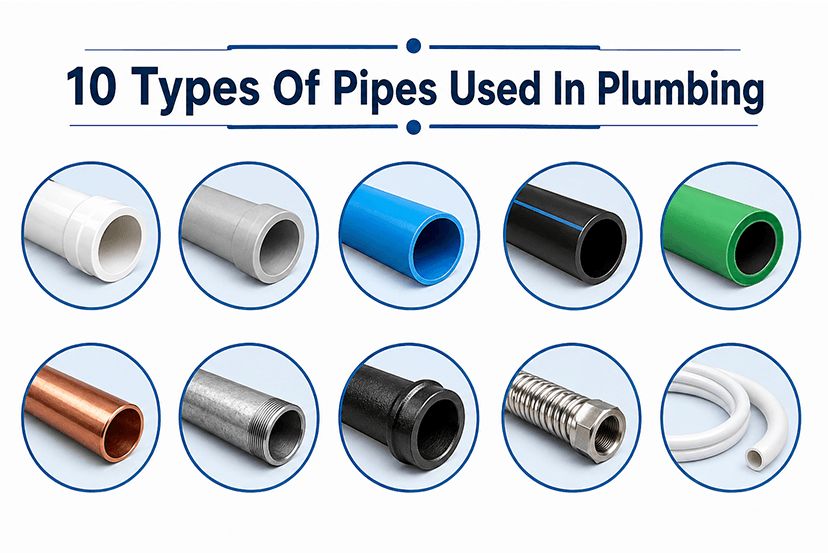
In this blog, we will explore the 10 most commonly used plumbing pipes, their importance, advantages, and ideal use cases.
Importance of Choosing the Right Plumbing Pipes
Selecting the correct plumbing pipe is crucial for maintaining a reliable and leak-free system. High-quality plumbing pipes help improve water flow, reduce maintenance costs, and ensure long-term durability.
Key Benefits of Using Proper Plumbing Pipes
- Ensures smooth water supply and drainage
- Prevents leakage and corrosion issues
- Enhances plumbing system lifespan
- Supports safe drinking water transportation
- Reduces maintenance and repair expenses
- Improves overall plumbing efficiency
Quick Look At The Types Of Plumbing Pipes You Must Know
Based on the importance and high prioritization by users, we have provided you with a list of 10 types of plumbing pipes, including their names, use cases, and advantages.
1. PVC Pipes (Polyvinyl Chloride Pipes)
PVC pipes are among the most widely used pipes in modern plumbing systems. These lightweight and cost-effective pipes are highly resistant to corrosion and chemical damage.
Importance of PVC Pipes
PVC pipes are preferred for their durability, affordability, and easy installation. They require minimal maintenance and offer excellent resistance against rust and scaling.
Use Cases of PVC Pipes
- Cold water supply systems
- Drainage and sewage systems
- Irrigation pipelines
- Underground water transportation
- Residential plumbing applications
Advantages
- Lightweight and easy to install
- Corrosion-resistant
- Affordable pricing
- Long service life
2. CPVC Pipes (Chlorinated Polyvinyl Chloride Pipes)
CPVC pipes are an upgraded version of PVC pipes designed to handle higher temperatures.
Importance of CPVC Pipes
These pipes are commonly used in hot and cold water supply systems because they can withstand high heat and pressure conditions.
Use Cases of CPVC Pipes
- Hot water plumbing systems
- Residential water supply lines
- Industrial liquid transportation
- Commercial plumbing projects
Advantages
- Heat resistant
- Durable and strong
- Easy joining and installation
- Low maintenance
3. Copper Pipes
Copper pipes have been used in plumbing for decades due to their excellent durability and reliability.
Importance of Copper Pipes
Copper is naturally resistant to bacteria and corrosion, making it ideal for clean water supply systems.
Use Cases of Copper Pipes
- Drinking water supply
- Hot and cold water systems
- HVAC systems
- Gas lines in some regions
Advantages
- Long lifespan
- Corrosion-resistant
- High-temperature tolerance
- Environmentally friendly
4. PEX Pipes (Cross-Linked Polyethylene Pipes)
PEX pipes are flexible plastic pipes increasingly used in modern plumbing systems.
Importance of PEX Pipes
These pipes simplify plumbing installation because of their flexibility and resistance to freezing temperatures.
Use Cases of PEX Pipes
- Residential water supply systems
- Underfloor heating systems
- Retrofitting old plumbing
- Hot and cold water lines
Advantages
- Flexible and easy to install
- Freeze-resistant
- Cost-effective
- Reduces leakage risk
5. Galvanized Steel Pipes
Galvanized steel pipes are steel pipes coated with zinc to prevent corrosion.
Importance of Galvanized Steel Pipes
These pipes were commonly used in older plumbing systems because of their strength and durability.
Use Cases of Galvanized Steel Pipes
- Water supply systems
- Outdoor plumbing applications
- Industrial water transportation
Advantages
- Strong and durable
- High impact resistance
- Suitable for heavy-duty applications
Limitations
- Can corrode internally over time
- Heavier than modern pipe materials
6. Cast Iron Pipes
Cast iron pipes are heavy-duty pipes mainly used for drainage and sewage systems.
Importance of Cast Iron Pipes
These pipes provide excellent soundproofing and high durability for underground installations.
Use Cases of Cast Iron Pipes
- Sewer lines
- Underground drainage systems
- Commercial buildings
- High-rise plumbing systems
Advantages
- Extremely durable
- Noise reduction properties
- Fire-resistant
7. ABS Pipes (Acrylonitrile Butadiene Styrene Pipes)
ABS pipes are black plastic pipes commonly used for drainage and vent systems.
Importance of ABS Pipes
ABS pipes offer high impact resistance and perform well in low-temperature conditions.
Use Cases of ABS Pipes
- Drain-waste-vent systems
- Underground drainage
- Residential plumbing systems
Advantages
- Lightweight
- Strong impact resistance
- Easy installation
8. HDPE Pipes (High-Density Polyethylene Pipes)
HDPE pipes are highly flexible and durable pipes used for large-scale water transportation.
Importance of HDPE Pipes
These pipes are known for their leak-proof joints, corrosion resistance, and ability to handle harsh environmental conditions.
Use Cases of HDPE Pipes
- Municipal water supply
- Gas distribution systems
- Industrial pipelines
- Agricultural irrigation
Advantages
- Highly durable
- Flexible design
- Chemical-resistant
- Long operational life
9. Stainless Steel Pipes
Stainless steel pipes are premium-quality plumbing pipes used in high-performance applications.
Importance of Stainless Steel Pipes
These pipes provide superior corrosion resistance and excellent strength in extreme environments.
Use Cases of Stainless Steel Pipes
- Industrial plumbing systems
- Chemical industries
- Coastal area plumbing
- High-pressure water systems
Advantages
- Corrosion-resistant
- Attractive appearance
- Strong and durable
- Heat resistant
10. Concrete Pipes
Concrete pipes are mainly used in heavy-duty underground drainage and sewage systems.
Importance of Concrete Pipes
These pipes are ideal for large-scale infrastructure projects due to their strength and load-bearing capability.
Use Cases of Concrete Pipes
- Stormwater drainage
- Sewer systems
- Municipal infrastructure
- Highway drainage projects
Advantages
- Extremely strong
- Long-lasting
- Suitable for underground installations
Factors to Consider While Choosing Plumbing Pipes
Selecting the right plumbing pipe depends on several important factors.
1. Pipe Material: Different materials offer different levels of strength, flexibility, and corrosion resistance.
2. Water Temperature: Hot water systems require heat-resistant pipes like CPVC or copper.
3. Pressure Capacity: Industrial and commercial systems often require high-pressure pipes.
4. Budget: PVC and PEX pipes are generally more affordable than copper or stainless steel pipes.
5. Installation Area: Underground, indoor, and outdoor applications require different pipe properties.
Applications of Plumbing Pipes Across Industries
Plumbing pipes are used in various sectors for different purposes.
| Industry | Common Pipe Applications |
| Residential | Water supply and drainage |
| Commercial | HVAC and plumbing systems |
| Agriculture | Irrigation systems |
| Industrial | Chemical and liquid transportation |
| Municipal | Sewage and water distribution |
Advantages of Modern Plumbing Pipes
Modern plumbing pipes are designed with advanced materials to improve performance and durability.
Major Benefits
- Better corrosion resistance
- Faster installation
- Improved water flow efficiency
- Reduced maintenance costs
- Longer operational lifespan
Conclusion
Plumbing pipes are the foundation of efficient water supply and drainage systems. From affordable PVC pipes to durable stainless steel and HDPE pipes, every type serves a specific purpose based on the application requirements. Selecting the appropriate pipe material helps enhance system efficiency, minimize repair costs, and ensure long-term reliability.
Whether you are planning a residential plumbing installation, an industrial pipeline setup, or a municipal drainage project, understanding the different types of plumbing pipes and their respective applications can help you make the best decision for your specific needs.
Frequently Asked Questions (FAQs)
What are the most common pipes used in plumbing?
PVC, CPVC, copper, PEX, and HDPE pipes are among the most commonly used plumbing pipes.
Which pipe is best for hot water supply?
CPVC and copper pipes are widely preferred for hot water applications due to their heat resistance.
Why are PVC pipes popular in plumbing?
PVC pipes are affordable, lightweight, corrosion-resistant, and easy to install.
What are HDPE pipes used for?
HDPE pipes are mainly used in water supply, gas distribution, irrigation, and industrial piping systems.
Which plumbing pipe lasts the longest?
Copper and stainless steel pipes are known for their long lifespan and durability.