








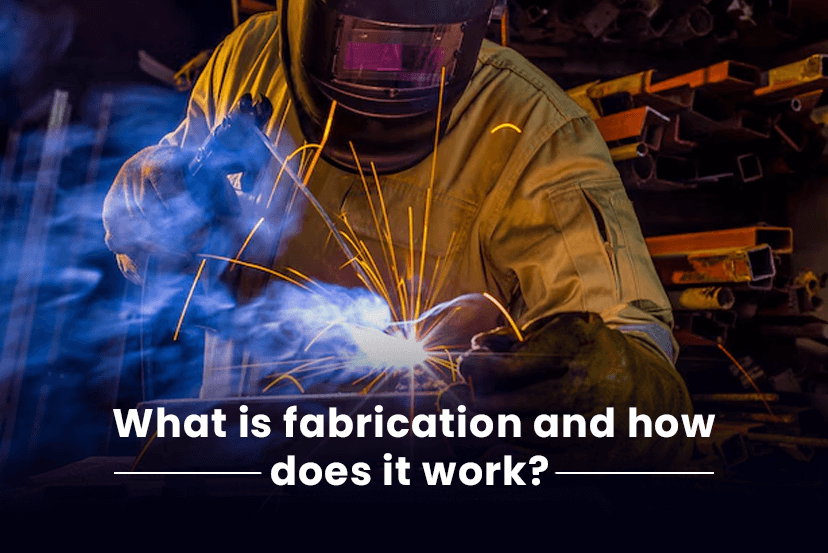
In today’s manufacturing-driven world, fabrication plays a vital role in transforming raw materials into functional products used across industries. From construction and automotive to electronics and industrial machinery, fabrication is the backbone of modern production. But what exactly is fabrication, and how does it work? Let’s explore the concept in detail, step by step.
What does fabrication work mean?
Focusing on the Fabrication work means the process of converting raw materials into finished or semi-finished products using various industrial techniques such as cutting, bending, assembling, welding, and finishing. Unlike simple assembly, fabrication involves reshaping and modifying materials to meet design and functional requirements.
Fabrication work is commonly associated with metals, but it also applies to plastics, glass, wood, composites, and electronic components.
What are the Types of Fabrication
Fabrication methods vary depending on material, use cases, and industry.
1. Metal Fabrication
Metal fabrication involves transforming metals like steel, aluminum, copper, and iron into usable components. It is widely used in:
- Construction
- Automotive manufacturing
- Aerospace and heavy machinery
2. Structural Fabrication
This type focuses on creating load-bearing structures such as beams, frames, and columns, commonly used in bridges, buildings, and factories.
3. Sheet Metal Fabrication
Sheet metal fabrication uses thin metal sheets to create enclosures, cabinets, ducts, and panels through cutting and bending processes.
4. Industrial Fabrication
Industrial fabrication produces large-scale equipment, machines, and customized tools used in manufacturing plants and heavy industries.
How Does Fabrication Work? (Step-by-Step Process)
Fabrication usually follows a well-structured process to ensure accuracy, strength, and quality. If you want to know the complete process of fabrication work, check out the steps listed below.
Step 1: Design and Engineering
The process begins with technical drawings or CAD (Computer-Aided Design) models. These designs specify:
- Dimensions
- Materials
- Tolerances
- Functional requirements
Step 2: Material Selection
Raw materials are selected based on:
- Strength requirements
- Environmental conditions
- Cost efficiency
- Durability and corrosion resistance
Common materials include steel, stainless steel, aluminum, and alloys.
Step 3: Cutting
Cutting is used to shape materials into required sizes using tools such as:
- Laser cutting
- Plasma cutting
- Waterjet cutting
- Sawing and shearing
Accurate cutting ensures minimal material wastage and precise dimensions.
Step 4: Forming and Bending
In the forming and bending stage, flat or straight materials are reshaped using:
- Press brakes
- Roll forming machines
- Forging techniques
Forming adds strength and allows components to fit together correctly.
Step 5: Assembly and Welding
Multiple parts are joined using:
- Welding
- Bolting
- Riveting
- Adhesives
Welding is the most common method, ensuring high strength and structural integrity.
Step 6: Machining
Machining refines fabricated parts to achieve high precision using:
- Drilling
- Turning
- Milling
- Tapping
This step ensures parts meet tight tolerances and exact specifications.
Step 7: Finishing and Surface Treatment
Finishing improves appearance, durability, and corrosion resistance. Common finishing techniques include:
- Painting
- Powder coating
- Polishing
- Galvanizing
- Anodizing
Step 8: Quality Inspection
The final step involves inspection and testing to ensure:
- Dimensional accuracy
- Structural strength
- Safety compliance
- Surface quality
Quality control prevents defects and ensures reliability.
Tools and Equipment Used in Fabrication
Fabrication relies on specialized machinery, such as:
- CNC machines
- Laser cutters
- Welding machines
- Press brakes
- Grinding and polishing tools
Advanced fabrication facilities often use automation and robotics for improved efficiency and consistency.
Applications of Fabrication
Fabrication processes are used across multiple sectors, including:
- Construction and infrastructure
- Automotive and transportation
- Power plants and the energy sector
- Electronics and appliances
- Furniture and consumer goods
Almost every physical product we use today has undergone some form of fabrication.
Advantages of Fabrication
Fabrication plays a vital role in modern manufacturing because it offers flexibility, efficiency, and reliability across industries. Below are the key advantages of fabrication, explained clearly and practically:
Customization and Design Flexibility
Fabrication allows products to be custom-made according to specific requirements. Whether it’s size, shape, material, or finish, fabrication supports tailor-made solutions that standard products cannot offer.
High Strength and Durability
Fabricated components are designed to withstand heavy loads, pressure, and harsh environments. Advanced joining and forming techniques ensure strong, long-lasting structures.
Cost-Effective Production
Fabrication helps reduce overall costs by:
- Minimizing material waste
- Enabling bulk production
- Reducing rework and errors
Precision and Accuracy
Modern fabrication uses CNC machines and automated tools, ensuring tight tolerances and high dimensional accuracy. This results in consistent quality and minimal defects.
Faster Production Time
With automated cutting, welding, and forming processes, fabrication significantly reduces production lead time, enabling faster project completion and quicker market delivery.
Future of Fabrication
The future of fabrication lies in:
- Automation and robotics
- AI-driven design and quality checks
- Additive manufacturing (hybrid fabrication)
- Sustainable and eco-friendly materials
Conclusion
Fabrication is a core manufacturing process that turns raw materials into functional, high-quality products used across industries. Understanding what fabrication is and how it works helps businesses make informed decisions, improve production efficiency, and achieve better product quality.
Whether it’s a simple metal component or a large industrial structure, fabrication remains essential to modern engineering and industrial growth.