








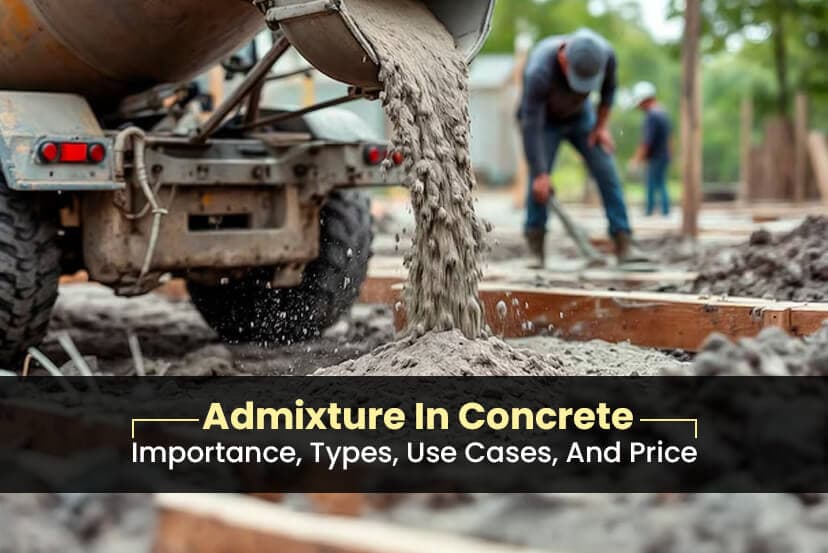
Concrete is the backbone of modern construction, and its performance largely depends on its composition. While cement, sand, aggregates, and water form the basic concrete mix, admixtures in concrete play a crucial role in enhancing its properties. Admixtures are chemical or mineral substances added to concrete before or during mixing to modify its behavior in fresh or hardened states. In today’s construction industry, admixtures are essential for improving strength, durability, workability, and cost efficiency. Industries looking to procure the best admixtures for concrete in bulk though online platform, then Moglix is the one-stop destination to purchase them efficiently. We provide you wide range of admixtures from various manufacturers and suppliers at the most competitive prices.
What Is Admixture in Concrete?
A concrete admixture is a material other than water, cement, and aggregates that is added to the concrete mix to alter specific properties. These materials help concrete meet special requirements such as faster setting, higher strength, improved flow, or resistance to environmental conditions. The use of admixture in concrete has become standard practice in residential, commercial, and large-scale infrastructure projects.
Understand the Importance of Admixture in Concrete
The growing demand for high-performance and sustainable construction has increased the importance of admixtures. Some key benefits include:
- Improved workability without increasing water content
- Enhanced strength and durability of concrete structures
- Reduced water-cement ratio, leading to better quality concrete
- Controlled setting time, suitable for different climatic conditions
- Cost optimization by reducing cement usage
- Better resistance to chemicals, moisture, and temperature variations
What are the Types of Admixture used in Concrete?
Concrete admixtures are broadly classified into chemical admixtures and mineral admixtures.
1. Chemical Admixtures
Chemical admixtures are added in small quantities and are commonly used in ready-mix and site-mix concrete.
a) Plasticizers (Water Reducers)
Plasticizers improve the workability of concrete by reducing water content without compromising strength. They are widely used in residential and commercial construction.
Use Cases:
- Slabs, beams, and columns
- General RCC work
b) Superplasticizers
Superplasticizers provide high workability and flowability, making them ideal for complex and high-strength concrete structures.
Use Cases:
- High-rise buildings
- Bridges and flyovers
- Self-compacting concrete (SCC)
c) Accelerating Admixtures
These admixtures speed up the setting and hardening process of concrete, especially in cold weather.
Use Cases:
- Road repairs
- Precast concrete elements
- Emergency construction projects
d) Retarding Admixtures
Retarders slow down the setting time of concrete, allowing longer working time in hot climates or large pours.
Use Cases:
- Mass concreting
- Hot weather concreting
- Large foundations and dams
e) Air-Entraining Admixtures
These admixtures introduce microscopic air bubbles into concrete to improve freeze-thaw resistance.
Use Cases:
- Pavements
- Cold region construction
- Exterior concrete surfaces
2. Mineral Admixtures
Mineral admixtures are usually industrial by-products and are added in larger quantities to improve long-term performance.
a) Fly Ash
Fly ash improves workability, durability, and resistance to chemical attacks while reducing cement consumption.
Use Cases:
- Mass concrete
- Sustainable and green buildings
b) Silica Fume
Silica fume increases compressive strength and reduces permeability, making concrete denser and more durable.
Use Cases:
- High-strength concrete
- Marine structures and bridges
c) Ground Granulated Blast Furnace Slag (GGBS)
GGBS enhances durability and resistance to heat and chemicals.
Use Cases:
- Industrial floors
- Coastal and underground structures
Common Use Cases of Admixture in Concrete
Admixtures are used across various construction applications, including:
- Residential and commercial buildings
- Highways, bridges, and flyovers
- Dams and large foundations
- Precast concrete products
- Water tanks and sewage systems
- Industrial flooring and warehouses
Their use ensures better performance, longevity, and reduced maintenance costs.
Have a look at the Price of Admixture in Concrete (India)
The price of admixture used in concrete depends on type, brand, dosage, and quantity required. Below is an approximate price range in India:
| Type of Admixture | Price Range (₹) |
| Plasticizer | ₹80 – ₹150 per liter |
| Superplasticizer | ₹120 – ₹250 per liter |
| Accelerators | ₹100 – ₹220 per liter |
| Retarders | ₹90 – ₹180 per liter |
| Fly Ash | ₹2 – ₹5 per kg |
| Silica Fume | ₹25 – ₹60 per kg |
| GGBS | ₹3 – ₹7 per kg |
Note: Prices may vary based on brand, location, and bulk purchase.
How to Choose the Right Admixture for Concrete
Selecting the right admixture depends on several factors:
- Type of construction project
- Environmental and climatic conditions
- Required strength and durability
- Setting time and workability needs
- Budget and availability
Conclusion
The use of construction chemicals has transformed modern construction by improving quality, performance, and sustainability. From enhancing workability to increasing durability and reducing costs, admixtures are indispensable in today’s concrete technology. Understanding the importance, types, use cases, and price of concrete admixtures helps builders, engineers, and contractors make informed decisions and achieve superior construction results. If you are looking to buy the best concrete admixtures, then you can simply partner with Moglix Business for seamless procurement.